







Jammu and Kashmir has no listed active local militants left, according to security establishment assessments, and security forces have now turned their full attention to an estimated 65 Pakistani terrorists operating in the Union Territory, most of them linked to Lashkar-e-Taiba and Jaish-e-Mohammed.

The turning point came with the killing of Lashkar-e-Taiba commander Mohammad Lateef Bhat, who was shot dead in an encounter in Kulgam district on November 18 after an eight-day search operation. Bhat, 22, was considered the last known active local terrorist in the Kashmir Valley, and his death has left the Valley with no listed local militant on the security forces' rolls.
His associate Nisar, described as a new recruit, had been killed near the Larnoo bypass on November 16, two days earlier.
The operation that ended with Bhat's death followed an attack on a Central Reserve Police Force picket in Kulgam on November 11, in which three personnel were injured. Security forces launched a search that lasted eight days and ended with Bhat being killed outside a mosque in Zangalpora village after a week-long pursuit. Officials said he had refused to surrender and was killed while attempting to escape the cordon.
Union Home Minister Amit Shah described the development as a major milestone in the fight against terrorism. Following the killing of Lashkar-e-Taiba terrorist Lateef Bhat, he said on November 19, Kashmir is now free of locally recruited terrorists born in India. Jammu and Kashmir Police Director General Nalin Prabhat also described the killing as a milestone, noting that local recruitment had fallen to almost zero.
The assessment marks the first time since the armed militancy began in 1989 that the Valley has had no active local militant on the list, a fact that officials have presented as evidence of a fundamental change in the security landscape.
The change, however, does not mean the threat has disappeared. Security agencies have launched a massive hunt for an estimated 65 Pakistani terrorists operating in Jammu and Kashmir, all of them foreign nationals affiliated with Pakistan-based groups. Of the 65, about 35 are linked to Lashkar-e-Taiba and 25 to Jaish-e-Mohammed, with the remainder belonging to other outlawed organisations.
Their presence has been confirmed through inputs received from different intelligence agencies, and their movements are being monitored, officials said. The figure is an assessment rather than a fixed count, and officials have cautioned that it varies as the terrorists frequently change locations.
The estimated number has fallen sharply over the past two years. According to security establishment figures, the total number of active terrorists in the Union Territory stood at 135 in 2022, including 85 foreign terrorists and 50 local militants. By 2024, the total had fallen to 91, including both foreign and local terrorists.
The current figure of around 65 comprises only Pakistani terrorists. An earlier assessment in October had put the number of foreign terrorists at around 35, a lower figure that reflects how assessments from different agencies at different times can vary, and how fluid the numbers are as terrorists move between locations.
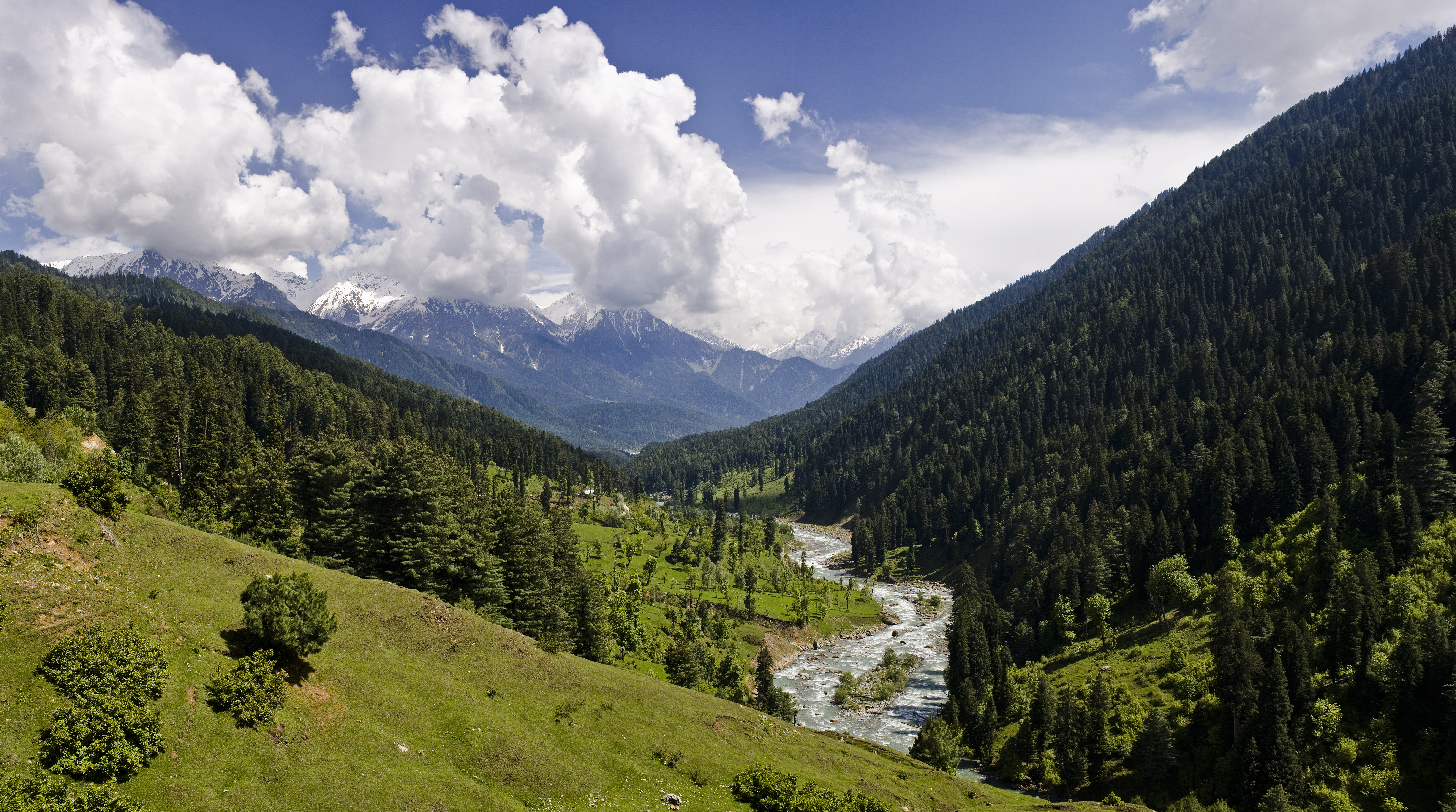
The remaining foreign terrorists are concentrated in the Jammu division, particularly in districts marked by dense forests and rugged mountainous terrain. Security agencies are tracking their movements in Poonch, Rajouri, Kishtwar and Doda, where the difficult geography provides cover. Officials say some foreign terrorist groups have adapted their methods to reduce their dependence on local assistance, particularly while establishing hideouts in remote forest areas.
A mobile phone recovered from a Jaish-e-Mohammed commander killed in Kishtwar in February reportedly contained photographs of terrorists cutting trees and preparing a hideout, an indication of how the groups sustain themselves in the forests.
The shift in focus to the Jammu forests follows a series of operational successes this year. The elimination of all seven members of the Jaish-e-Mohammed group led by Saifullah in Kishtwar was a major achievement.
The group, which had infiltrated in April 2024, was neutralised in a series of operations culminating on February 22 in the Chatroo area during Operation Trashi-I. The National Investigation Agency subsequently filed a chargesheet against an arrested accused and three killed Pakistani terrorists, alleging that the group had received local logistical assistance.
In August, the agency conducted searches in Kashmir in a cross-border terror conspiracy case involving alleged local overground workers who were accused of providing communication, shelter, reconnaissance and logistical support to infiltrated terrorists. In October, it chargesheeted an accused in connection with the Kishtwar terror attack, alleging that he had harboured and concealed members of Saifullah's group.
To stay ahead of infiltration attempts, security forces have set up nearly 100 temporary bases at key spots to block routes used by terrorists trying to cross over, particularly before winter closes the mountain passes. Officials say the focus is now on preventing infiltration, identifying support networks and tracking foreign terrorists, rather than on local recruitment, which has effectively dried up.
The disappearance of local militants has altered the security landscape, but the agencies are clear that the hunt for foreign terrorists will continue, and that the numbers will keep changing as the terrorists move.
Officials have been careful to frame the milestone as specific to the Kashmir Valley and to the list of known active local militants. Reports have suggested that a small number of local terrorists are still believed to be active in the Jammu division, including in the forested areas of Kathua and Kishtwar, and security agencies have said they are tracking them.
That distinction matters: the end of local militancy in the Valley does not mean the end of militancy in the Union Territory as a whole, and the operations in the Jammu forests are now the centre of the security effort.
The milestone has been welcomed by the security establishment as the outcome of years of sustained counter-terrorism operations, better intelligence and the drying up of local recruitment. It also changes the character of the challenge. Where the Valley once faced a mix of local and foreign militants, the remaining threat is now almost entirely cross-border, concentrated in the forests of Jammu and dependent on infiltration rather than local support.
Whether that threat can be reduced as quickly as local militancy was will depend on the operations now under way in Poonch, Rajouri, Kishtwar and Doda, and on the ability of the forces to seal the routes the terrorists use.
(Reporting based on The Times of India, Deccan Herald and Republic World.)