






The death of six people in a helicopter crash near Joshimath on October 30 has brought renewed attention to a set of warnings issued more than a year ago by a parliamentary committee about the safety of helicopter operations in Uttarakhand. The committee had examined a cluster of accidents during the 2025 Char Dham pilgrimage season and concluded that the regulatory framework governing flights in the Himalayan state had serious gaps.

The latest crash, which occurred while the aircraft was flying from Badrinath to Dehradun, has made those findings relevant again, even as investigators work to establish what caused this particular accident.
The helicopter, operated by Trans Bharat Aviation, crashed near Chayee village in the Joshimath area of Chamoli district. All six people on board were killed, comprising five passengers and the pilot. Reports identified a Delhi-based pilot and a Karnataka police officer among the victims.
The aircraft lost communication over the Joshimath valley and its tracking system stopped transmitting its location. An orange alert had been issued for Chamoli, warning of thunderstorms, hail and gusty winds, and weather is expected to form an important part of the investigation, although it would be premature to attribute the crash to weather alone. The cause of the crash has not yet been established.
Uttarakhand Chief Minister Pushkar Singh Dhami said a joint rescue operation involving the district administration, the Disaster Management Department and the State Disaster Response Force was under way, and that he was monitoring the situation and had directed officials to airlift seriously injured people to higher medical centres.
That response reflected the difficulty of reaching a crash site in steep, high-altitude terrain, where road access is limited and conditions can change quickly.
The crash did not happen in isolation. Uttarakhand has become the most worrying helicopter accident zone in the country, according to figures cited in parliamentary replies. Ministry of Civil Aviation data for 2020 to 2025 showed that seven of the 12 helicopter crashes reported across India took place in the state, claiming 21 lives.
The toll included the crash near Gaurikund on June 15, 2025, in which seven people died, and the crash near Gangnani in May 2025, which killed six. Those two accidents alone accounted for 13 deaths in a single pilgrimage season.
Following the June 15, 2025 crash, the Ministry of Civil Aviation ordered an immediate review of helicopter operations in the region. All helicopter services in the Kedarnath Valley were suspended for two days, June 15 and 16. The ministry directed the Directorate General of Civil Aviation to enforce stricter safety protocols, while the Uttarakhand Civil Aviation Development Authority was asked to review all helicopter operators and pilots before services could resume.
The operations of Aryan Aviation were suspended, while the licences of two TransBharat Aviation pilots were suspended for six months after they were found flying in similar unsuitable weather conditions. The government also announced a dedicated command-and-control mechanism to monitor helicopter movements in real time.
Subsequently, in July 2025, the authority issued revised guidelines for charter helicopter operations during the Char Dham Yatra. These stipulated that pilots deployed for the operations must have a minimum of 1,500 hours of hill-flying experience. The guidelines also provided for daily limits on charter sorties, depending on aircraft capacity, prevailing weather conditions and civil aviation regulations.
Operators were required to report every take-off to the authority's operations team and comply with weather-related safety protocols. The guidelines also empowered the authority to suspend operations in cases of violations and report serious non-compliance to the aviation regulator.
The government subsequently introduced additional safeguards for the post-monsoon phase of the 2025 pilgrimage season. In a written reply to the Lok Sabha on December 4, 2025, the Ministry of Civil Aviation said control rooms had been operationalised at Sahastradhara helipad in Dehradun and Sitapur near Kedarnath. These were manned by authority officers responsible for taking go or no-go decisions based on real-time assessments of weather and air traffic.
An air traffic control officer and an India Meteorological Department officer were also deployed at each control room to maintain radio communication with helicopters in flight and disseminate critical weather information. Additional weather cameras were installed along the Char Dham and Kedarnath routes.
The ministry also said the aviation regulator had inspected six helicopter operators and seven helipads before granting permission for Kedarnath operations. For Char Dham operations, 12 operators and 10 helipads were inspected or audited before receiving operational approval. On paper, therefore, the system that emerged from the 2025 accidents looked considerably tighter than the one that had preceded them.
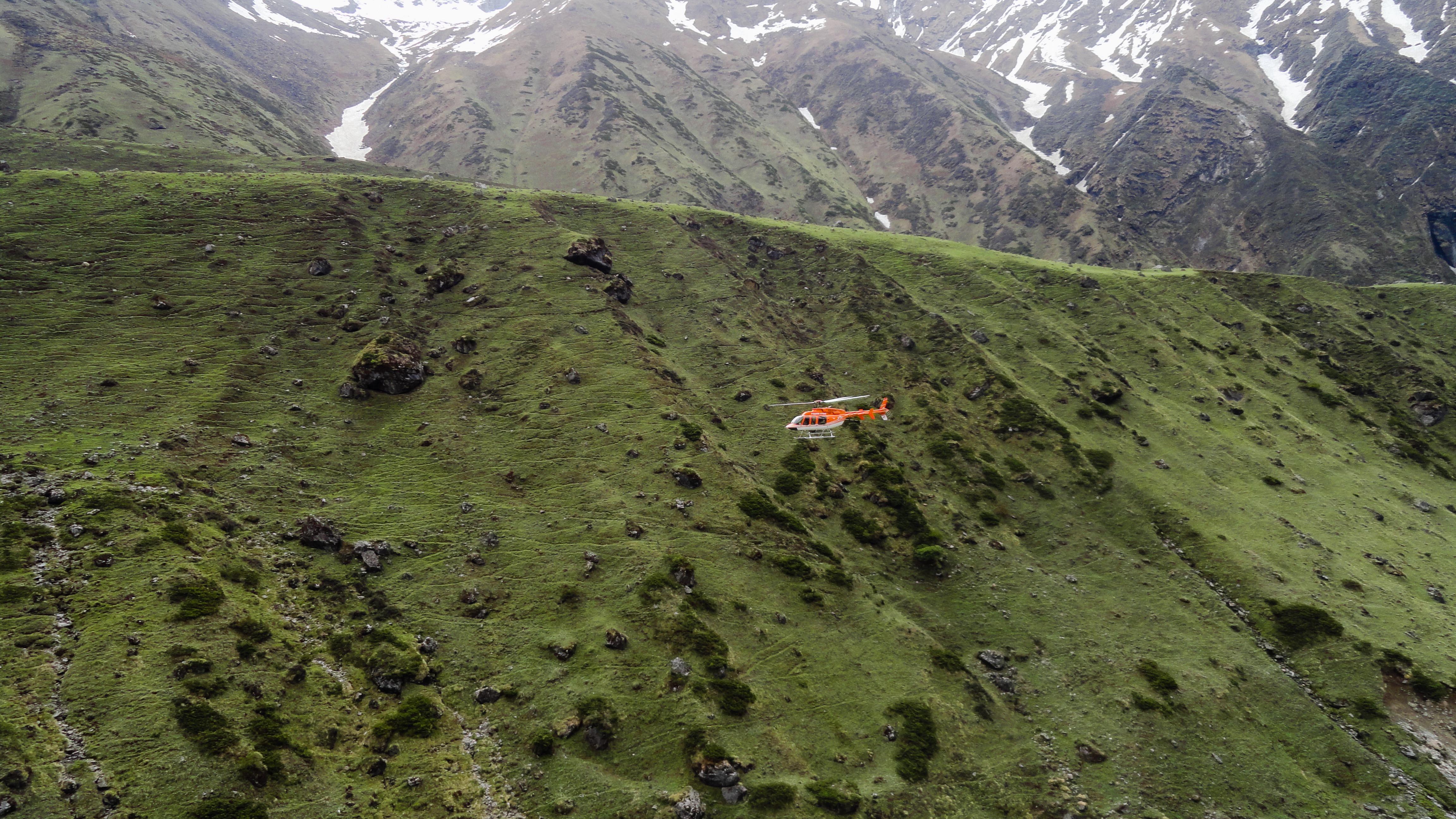
Despite these measures, a parliamentary standing committee subsequently raised concerns about the regulatory framework governing helicopter operations in Uttarakhand. In its 380th report on the overall review of safety in the civil aviation sector, presented to Parliament on August 20, 2025, the Rajya Sabha's Department-related Parliamentary Standing Committee on Transport, Tourism and Culture examined the four helicopter accidents during the 2025 Char Dham Yatra.
The committee pointed to three major challenges: difficult topography, rapidly changing and often severe weather conditions, and high-density air traffic.
More significantly, it questioned the division of responsibilities between the aviation regulator and the state authority. While the state authority, a state government body, manages several operational aspects of the Char Dham helicopter services, including selection of shuttle operators, flight scheduling and slot management, the regulator is responsible for aviation safety, airworthiness standards and enforcement.
The committee flagged the absence of mandatory, terrain-specific mountain-flying training and certification for pilots operating in the Himalayan region. It also recorded the regulator's concern that the state authority lacked adequately trained and competent manpower to manage high-density helicopter operations.
The committee recommended a uniform national regulatory framework for helicopter operations managed by state agencies, mandatory mountain-flying training and certification for pilots, and a dedicated oversight cell within the regulator to monitor high-altitude helicopter operations throughout the year.
It also said the measures taken by the regulator after the accidents were largely reactive, a criticism that goes to the heart of the debate now: whether safety improvements in Uttarakhand have followed accidents rather than prevented them.
Aviation experts have made a similar point. The frequency of accidents and emergency landings, they argue, should have led to a more fundamental rethink of how these services are run. Instead, safety measures have often followed accidents.
The concentration of flights during the pilgrimage season, rapidly changing weather, difficult terrain, and gaps in policy and implementation of safety-critical measures combine to make chopper rides in the hill state dangerous, according to experts quoted in recent coverage.
One particularly dangerous scenario is controlled flight into terrain, which occurs when an aircraft that remains under the control of its pilot unintentionally strikes terrain or an obstacle. Preliminary indications after the Gaurikund crash suggested this as the probable cause, with the helicopter reportedly airborne despite poor visibility and extensive clouding. Another recurring issue is the lack of reliable and localised weather information.
Conditions at a base can differ sharply from conditions on a ridge a few kilometres away, and a forecast that looks acceptable on paper may not reflect what a pilot encounters in a narrow valley.
The scale of the operation adds to the risk. For the 2026 Char Dham season, the ministry said around 400 helicopter movements were being conducted daily during the first phase, carrying more than 78,000 pilgrims through shuttle and charter services. That volume, in airspace threaded through high mountain valleys, leaves little margin for error when weather closes in or when communication falters.
What happens next will depend on the investigation into the October 30 crash, which must establish what went wrong.
But the parliamentary committee's report already provides a checklist against which the response can be judged: a uniform national framework rather than a patchwork of state arrangements, mandatory mountain-flying certification rather than general experience requirements alone, and a dedicated oversight cell that monitors high-altitude operations year-round rather than only during the pilgrimage season.
Until those recommendations are fully implemented, each new accident in Uttarakhand will inevitably be read against the warnings that preceded it.
(Reporting based on The Indian Express, The Tribune and Outlook.)