
More than a decade after Formula 1 cars last raced at Greater Noida, India is once again talking seriously about bringing the sport back. A task force under NITI Aayog has been set up to assess the motorsport ecosystem, review the challenges that affected the sport in the past, and examine the feasibility of hosting a Formula 1 race, with a target of a possible return by 2028.

Before India can look at a new Grand Prix, though, there is a question from the previous one that still needs answering: why did Formula 1 leave India after just three races?
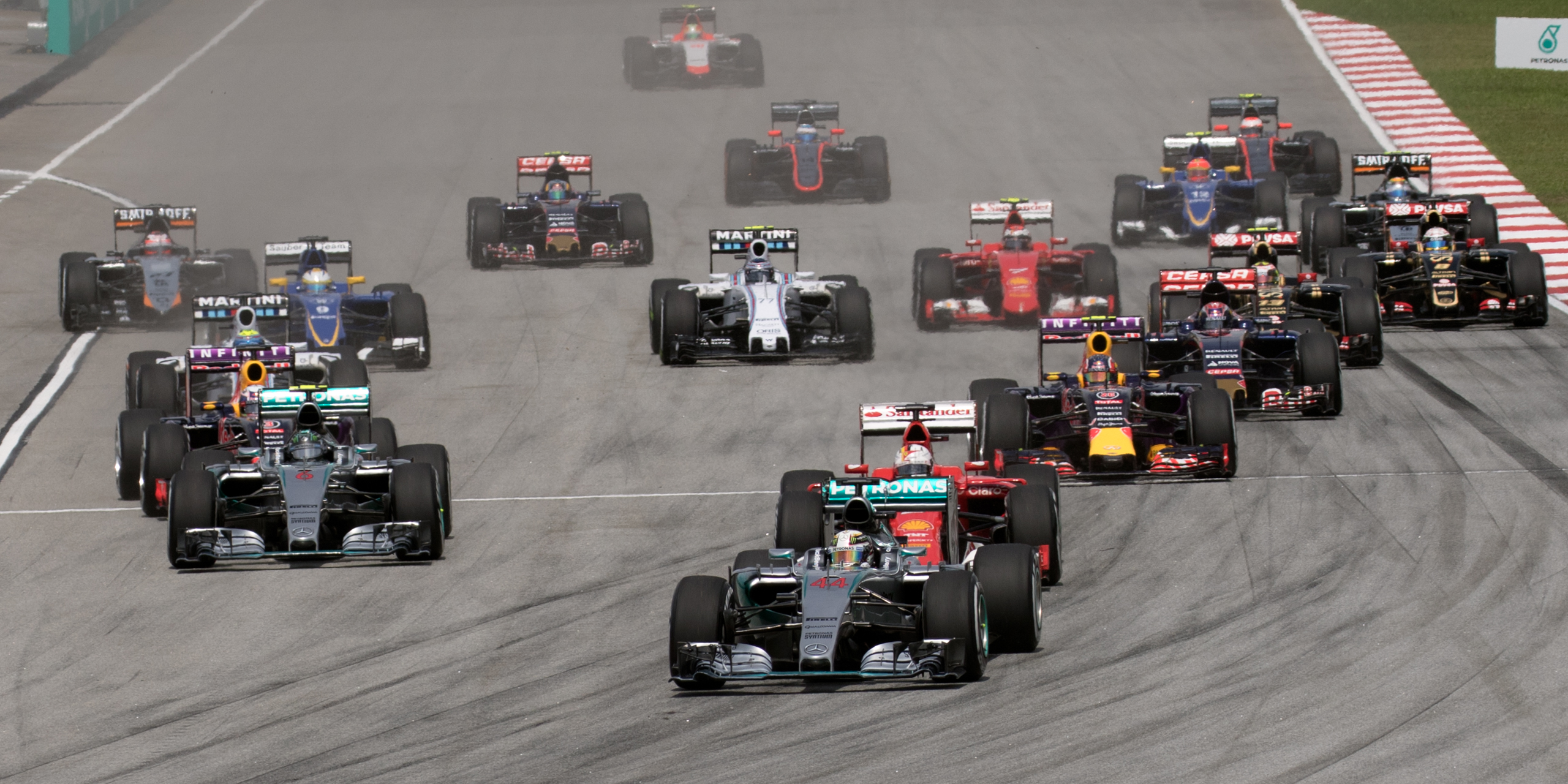
The story begins with genuine excitement. The Buddh International Circuit was built in 2011 and was designed by German engineer Hermann Tilke. It hosted the Indian Grand Prix for three seasons, from 2011 to 2013, and Sebastian Vettel won all three races.
The track and its facilities drew praise from the Formula 1 community, and for a brief period India seemed to have secured a permanent place on the calendar of the world's most glamorous motorsport. The races drew large crowds, the circuit was regarded as one of the better new venues in the sport, and Indian fans, whose numbers have since grown to around sixty million, had a home race to call their own.
Then it unravelled, and the central problem was tax. The dispute centred on the taxation of Formula 1 and its commercial activities in India. A key question was whether Formula 1 should be classified as a sport or as an entertainment business under Indian tax laws.
That classification affected tax exemptions, customs duties and payments between the race promoter and Formula 1's commercial rights holder. The Uttar Pradesh government classified the event as entertainment rather than sport, a decision that added as much as forty per cent in additional tax burden on tickets, according to later reporting.
The problems went well beyond ticket taxes. Importing racing equipment ran into customs bureaucracy, which added delay and cost for the organisers. The country's motorsport federation was still waiting for the sports ministry to recognise it as a national federation.
In the week of the final race, the organisers, Jaypee Sports International, attended a court hearing over overdue entertainment taxes from the previous race. The promoter itself later ran into financial difficulties, which further weakened the event's foundations.
The tax dispute eventually reached the Supreme Court. In 2017, the court ruled that Formula 1's commercial rights company had a permanent establishment in India, making income linked to its Indian operations taxable. The ruling complicated the tax position and the financial obligations surrounding the Indian Grand Prix.
Liberty Media, which acquired Formula 1's commercial rights in 2017, reportedly set aside fourteen point eight million dollars to settle the tax liability. At one stage, India demanded that Formula 1, including drivers, pay tax on one-nineteenth of its global earnings in the country, since the Indian Grand Prix was one of nineteen races, a demand that played out in courts for years. There were even tax demands on drivers for their earnings from India.
The episode exposed a fundamental challenge for India. Hosting a global sporting event requires more than a world-class venue. The regulatory framework, taxation rules and contractual arrangements must also work for an event that operates across international borders.
The Indian Grand Prix, by contrast, was seen largely as a private event promoted by the Jaypee Group, with the governments in the state and at the Centre not being active stakeholders. The lack of government endorsement, many veterans of the episode believe, was the root of almost all the issues. As motorsport veteran Vicky Chandhok, who was instrumental in bringing Formula 1 to India in 2011, later put it, the country made the sport feel unwelcome.
Former Formula 1 driver Karun Chandhok put the loss in similar words at the time, saying that the Indian government did not embrace Formula 1. That verdict still shapes how the sport views a comeback.
In March 2014, the sport's commercial chief confirmed that the circuit had been dropped from the 2014 championship. A return planned for 2015 was cancelled as the dispute continued. The Buddh International Circuit, built at great cost, fell silent as a Grand Prix venue, hosting domestic motorsport but never again the pinnacle of the sport it was built for.
What has changed to bring the idea back? Several things, and they are coming together at once. Behind the scenes, there have been several rounds of discussions between Formula One Management, the Adani Group as likely race promoters, and the Indian government.
The Adani Group's acquisition of the Jaypee Group's assets, which includes the Buddh International Circuit, has naturally reignited conversations about reviving the venue for international motorsport. The circuit remains India's only Formula 1 venue, and its new ownership gives the project a promoter with deep pockets and experience of large infrastructure.
Reports indicate that Pranav Adani attended the Singapore Grand Prix as a guest of the motorsport federation in a personal capacity, and that Karan Adani has expressed interest in bringing Formula 1 back to India. Industry reports also indicate that exploratory discussions have taken place between representatives of the Adani Group and Formula One Management about the feasibility of hosting a future race.
The government, too, has been making the right noises, especially with the setting up of the task force under NITI Aayog. The key ask from Formula One Management for taking conversations forward is more active government support, and a task force examining the ecosystem, the past problems and the feasibility of a return is a step towards providing it.
The task force's work will need to address the very issues that drove the sport away: how the event is classified for tax purposes, how equipment moves across borders, and what contractual and financial structure will underpin the race.
The commercial realities are daunting. Hosting Formula 1 involves substantial annual fees, estimated at three hundred to five hundred crore rupees, along with significant renovation costs for the track, estimated at one hundred and fifty to two hundred crore rupees. Those figures mean a return cannot be justified on ticket sales alone.
It would need to be seen as an investment in tourism, in India's image as a host of global events, and in the growth of a domestic motorsport industry that has produced drivers such as Karun Chandhok and Jehan Daruvala but has never had the home race that other major motorsport nations take for granted.
The fans, at least, are ready. Reigning world champion Lando Norris has voiced a keen interest in racing in India, saying he would love to race there, and noting that he has driven the Buddh Circuit on a simulator. Formula 1's own fan research has put India's fan base at about sixty million, a figure that makes the absence of an Indian race look increasingly odd as the sport expands into new markets.
Norris's enthusiasm is shared by many drivers who remember the Buddh circuit fondly, and by a generation of Indian fans who discovered the sport after the race had already gone.
There are reasons for caution, and they should be stated plainly. A race in the near future is unlikely, even on the most optimistic reading of the current discussions. The track needs renovation, the tax and customs questions need settled answers rather than assurances, and the commercial terms need to work for both Formula One Management and the promoter.
The history of the last attempt is a warning against announcing a return before those questions are answered. The 2015 comeback that was planned and then cancelled is a reminder that enthusiasm is not a substitute for a signed agreement.
But there is also a reason for genuine optimism that was absent a decade ago. This time, the push has government backing in the form of a task force, a promoter with the resources to sustain a long-term project, and a sport that is more popular in India than it was when the race left. The country is also more experienced at hosting global events, and more conscious of the economic and reputational value they bring.
If the task force does its work properly, and if the tax and regulatory issues are resolved in law rather than left to negotiation, a return by 2028 is not fanciful.
India's first Formula 1 chapter lasted just three races, and it ended in a tax dispute that embarrassed everyone involved. The second chapter, if it happens, will need to be built differently: with the government as an active partner, with clear tax treatment, and with a promoter and a circuit that can sustain the event for years rather than seasons.
The task force now examining that possibility has a difficult job, but it also has something its predecessors lacked: a clear record of exactly what went wrong last time, and a chance to put it right.
(Reporting based on The Times of India, The Economic Times and NDTV.)