







The Election Commission of India has told the Supreme Court that all decisions relating to the Special Intensive Revision of electoral rolls were taken unanimously, defending its actions and opposing a plea seeking to restrain Chief Election Commissioner Gyanesh Kumar from functioning.

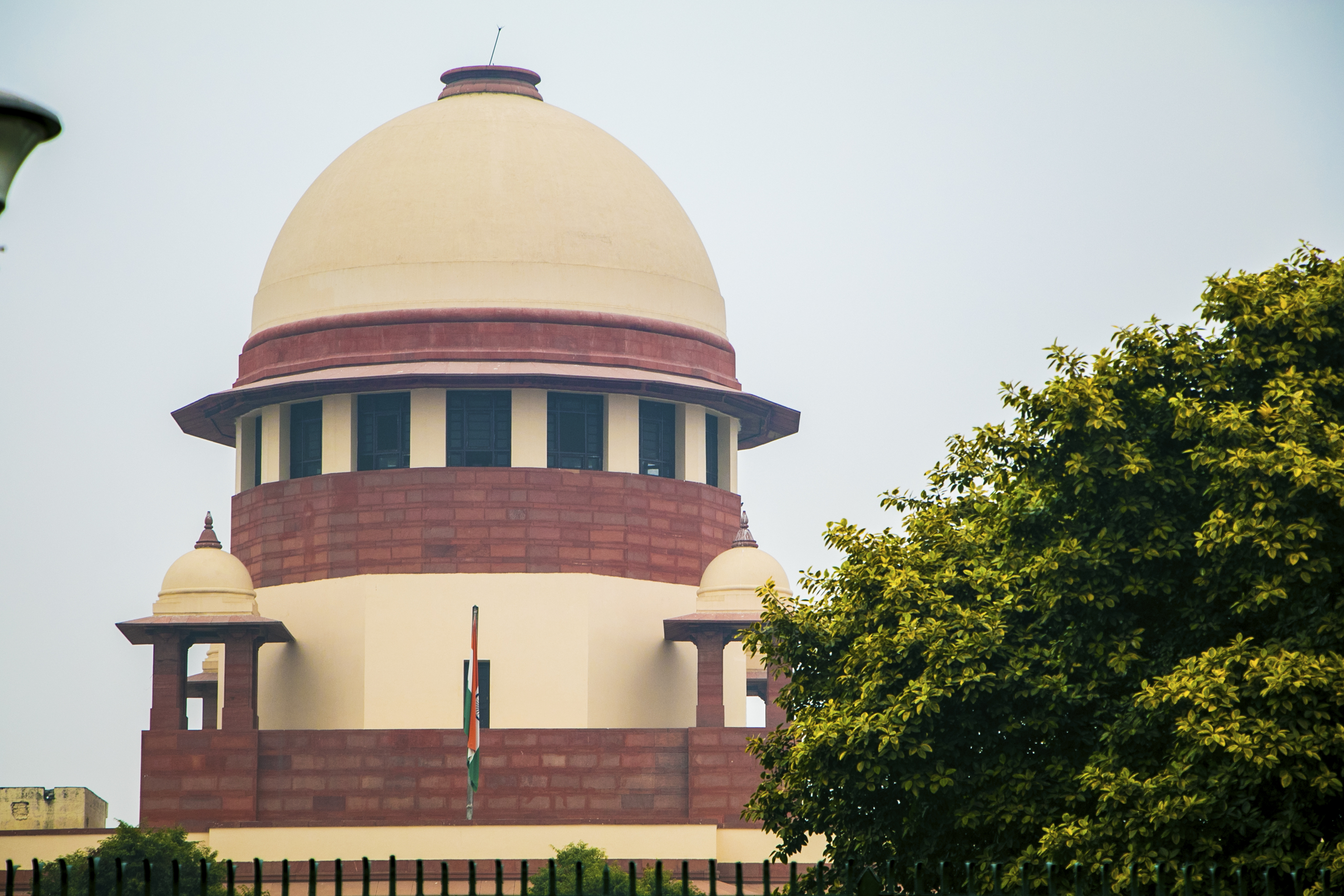
In a counter-affidavit filed on Monday, the poll body responded to a writ petition by Rakesh Kumar Singh, also known as Rakesh Singh, and to a batch of petitions challenging the functioning of the Chief Election Commissioner. The Supreme Court is expected to hear the batch of petitions on Tuesday, before a bench headed by Chief Justice Surya Kant, which had earlier issued notice in the matter.
The affidavit, filed by the Deputy Election Commissioner, stated that it had been approved unanimously by Kumar and the two other Election Commissioners, Sukhbir Singh Sandhu and Vivek Joshi. That unanimity, the Commission argued, is itself part of the answer to the allegations against it: the decisions under challenge were not the decisions of one individual but of the full three-member body.
At the heart of the affidavit is a defence of the Special Intensive Revision, the exercise through which electoral rolls are being revised to remove ineligible entries and add eligible voters. The Commission said all three SIR orders, issued in June 2025, October 2025 and May 2026, were unanimous decisions of the full Commission.
More precisely, the orders were dated June 24, 2025, October 27, 2025 and May 14, 2026, and each was approved unanimously by the Commission's three members in due compliance with Article 324 of the Constitution and Section 18 of the Chief Election Commissioner and other Election Commissioners (Appointment, Conditions of Service and Term of Office) Act, 2023.
The Commission also addressed the allegation that it had amended Form 6, the form used for voter registration. Form 6 has not been amended, the affidavit said. Only the Centre can amend it.
The SIR declaration is a separate document. That distinction is central to the Commission's case: the additional declaration introduced during the revision exercise was not an amendment to the statutory form but a separate requirement, and the power to amend the form itself rests with the central government.
The Commission did, however, acknowledge a presentational problem. It admitted that the online display could be read as an amendment, because the declaration appeared in a way that suggested it was part of Form 6 itself. From October 21, the online application has been split into Form 6 and the declaration, as in the physical form, so that the two are now clearly separate.
The concession is a limited one, but it shows the Commission responding to a criticism about how the process appeared to applicants, even as it denies that the form was legally amended.
The affidavit also took aim at the basis of the petitions. The batch of petitions challenging the Chief Election Commissioner's functioning was based entirely on a single newspaper report, the poll body said. A newspaper report is not treated as evidence in the eyes of law, the Commission argued, and the petitions are therefore not maintainable.
The Telegraph has reported that the petitions followed a report in The Indian Express, and the Commission's affidavit argues that allegations drawn from internal communications between Election Commissioners and the Cabinet Secretary are misconceived.
The Commission further argued that the Chief Election Commissioner can be removed only in the same manner as a judge of the Supreme Court, a constitutional protection designed to safeguard the independence of the poll body. A plea seeking to restrain the Chief Election Commissioner from functioning, on this view, runs against that protection and should not be entertained on the basis of a press report.
Much of the affidavit is devoted to explaining how the Commission actually works. Files normally moved from one Election Commissioner to the other before reaching the Chief Election Commissioner, the affidavit said. In urgent cases, electronic approvals were obtained and subsequently recorded in the physical file.
Notes, queries or suggestions recorded by the Chief Election Commissioner or Election Commissioners while a file is under process do not constitute decisions of the Commission, the affidavit stressed. The views expressed by members during the decision-making process are considered in arriving at a decision, and it is upon consideration of all the views placed before the Commission that the decision is taken and the orders issued in accordance with the process.
That explanation is intended to rebut the suggestion that individual notes or observations by members, made during the circulation of files, amounted to decisions taken without the approval of colleagues. Such approved decisions of the Commission are duly noted in the concerned files and bear the signature of the Election Commissioners and the Chief Election Commissioner, the affidavit said.
Thereafter, the decision is notified and implemented by the Election Commission's secretariat.
The affidavit also addressed a specific episode: a July 28 work allocation order issued by an Additional Secretary on deputation. Both Election Commissioners wrote to the Cabinet Secretary the following day, and the order was never implemented after their joint direction on July 30, the Commission said. The episode, as presented by the Commission, shows the members acting together to correct an unauthorised step, rather than a breakdown in the Commission's functioning.
The Commission also cautioned that any officer issuing orders beyond the powers delegated to them would face action, a warning that underscores its insistence on procedural discipline within its own secretariat.
The Special Intensive Revision itself has been one of the most contested electoral exercises in recent years. It involves a door-to-door verification of voters and the preparation of revised rolls, and it has generated intense political debate, with opposition parties raising concerns about deletions and the burden placed on voters, and the Commission insisting that the exercise is necessary to clean the rolls and protect the integrity of elections.
The petitions now before the Supreme Court are part of that wider contest, but they focus on a narrower question: whether the Commission's internal decision-making followed the law and whether its leadership acted within its authority.
The hearing on Tuesday will be watched closely for the court's response to the Commission's affidavit. If the court accepts the Commission's account, the petitions seeking restraint on the Chief Election Commissioner may struggle to proceed. If the court seeks further material, the dispute over the Commission's internal processes could continue, with implications for the ongoing revision exercise.
Beyond the immediate case, the affidavit raises broader questions about the governance of constitutional bodies. The Election Commission is designed to function as a multi-member body, and the affidavit's emphasis on unanimity is intended to show that it did so in the case of the revision orders.
Critics, however, are likely to press on whether unanimity in formal orders is sufficient, or whether the internal deliberations and the role of individual members deserve closer scrutiny.
The question of Form 6 illustrates a similar tension. The Commission's legal position is clear: only the central government can amend the form, and it did not do so. But the acknowledgement that the online presentation could be read as an amendment shows how administrative design can create confusion even when the legal position is sound.
The separation of the form and the declaration from October 21 is presented as the remedy, and applicants going through the process now should see the two documents distinctly.
For voters, the practical significance of the case lies in the stability of the revision process. A finding against the Commission's procedures could disrupt an exercise that affects electoral rolls across the country, while a finding in its favour would allow the process to continue on its present footing. Either way, the court's observations on Tuesday are likely to shape the next phase of the debate.
The Commission's affidavit is, in essence, a defence of its institutional functioning: its decisions were unanimous, its forms were not amended, its internal processes were followed, and the challenge to its leadership rests on a newspaper report rather than evidence. Whether the Supreme Court accepts that defence will become clearer when the bench takes up the matter.
(Reporting based on The New Indian Express, The Statesman and The Telegraph.)