







NEW DELHI: A forthcoming memoir by a former judge of the Supreme Court has reopened one of the most sensitive debates in Indian public life: how much distance the judiciary should keep from the government of the day when it chooses its own judges.

Justice Sanjay Kishan Kaul, who retired in December 2023 after serving fourteen months as the senior-most puisne judge of the Supreme Court after the Chief Justice of India, writes in his memoir that the then Chief Justice, Justice D Y Chandrachud, was "too deferential to the Government" when it came to judicial appointments.
The book, titled Without Fear or Favour, is to be published by Juggernaut later this month, and its contents have been reported from a pre-publication manuscript reviewed by The Indian Express.
At the heart of Justice Kaul's account is the Collegium, the body of the five senior-most judges of the Supreme Court that recommends names for appointment to the higher judiciary. Under the system that has operated since the 1990s, the Collegium's recommendations go to the government, which may seek reconsideration but is bound to accept a reiterated recommendation.
The arrangement was designed to protect judicial independence, yet the relationship between the Collegium and the executive has rarely been free of friction, and Justice Kaul's memoir describes that friction from the inside.
According to the account, Justice Chandrachud, as Chief Justice, at one point sought the government's "nod" before the Collegium had even met to discuss names. On another occasion, he is said to have voiced what Justice Kaul describes as the government's "bizarre" query regarding the caste of a candidate belonging to a minority faith.
Justice Kaul writes that the question of how to engage with a "political class" that will inevitably ask for more became a "strain" in his relationship with the then Chief Justice, and that he repeatedly pushed back, once even walking out of the room during a meeting.
The memoir gives a detailed illustration of one such disagreement. Justice Kaul recounts that during a Collegium meeting, the then Chief Justice took him aside to a separate room and asked whether he should telephone the government to ascertain its views on the proposed appointments. Justice Kaul says he told him that such a step should not be taken while the Collegium was still deliberating on the names.
The Collegium had, by his account, already agreed on five names, but the Chief Justice wanted a sixth name, put forward at the last minute, to be approved as well. That, Justice Kaul writes, was not acceptable to him or to the other members of the Collegium.
"Maybe he had already taken some kind of approval from the Government for the other names, including the sixth name," Justice Kaul is reported to have said in an interview discussing the book. Asked whether the then Chief Justice had taken the government's approval in advance, even before the Collegium decided, he replied that names being discussed with the government beforehand had, unfortunately, become a practice.
"This has become unfortunately a practice of names being discussed, and some kind of previous discussion with the Government. That used to happen. It has been happening, I think, before and after. That is why it troubles me," he said.
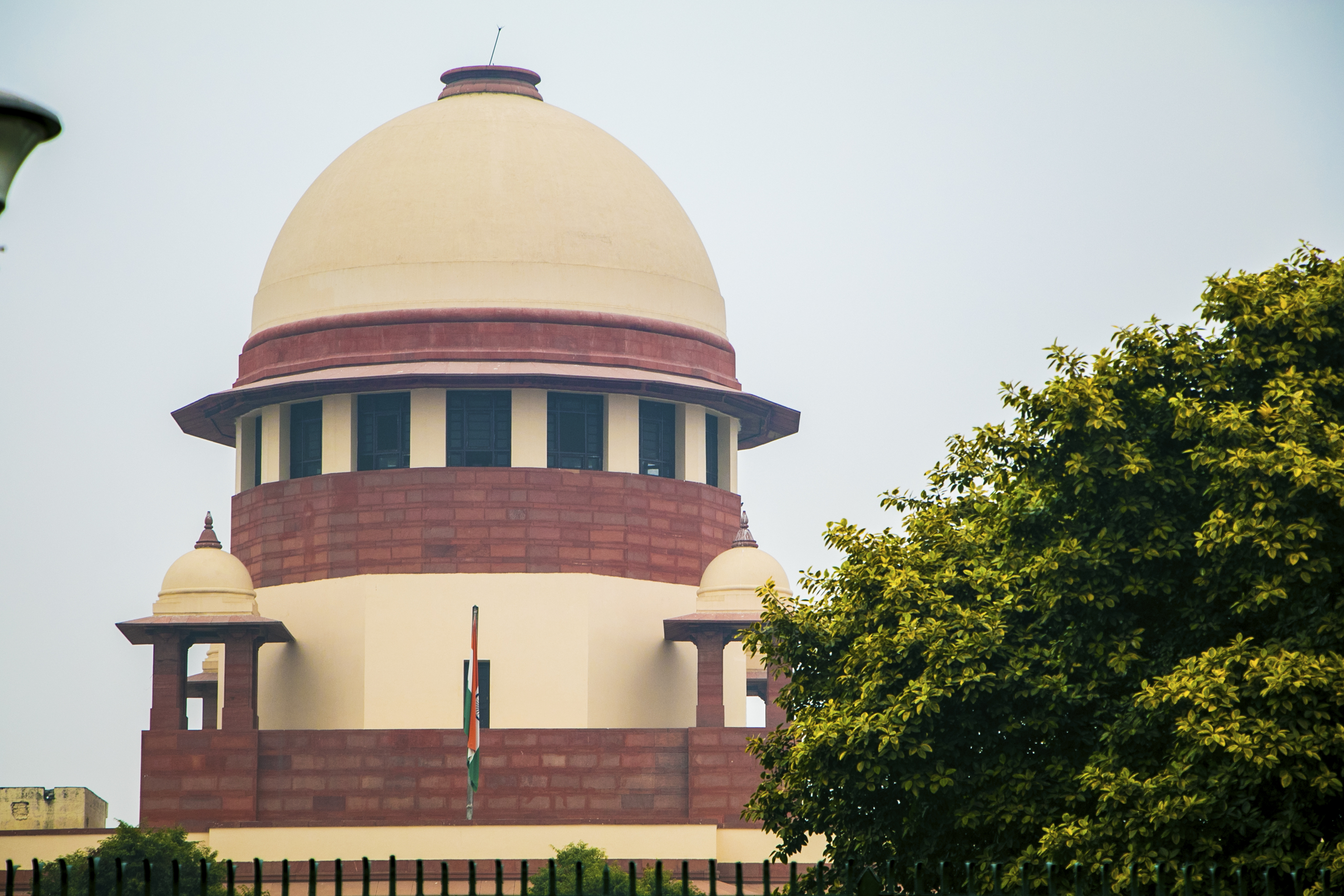
Justice Kaul's criticism, however, comes with an important qualification, and it is one that runs through the memoir as a central theme. "I found that the Government has far more respect for judges with a spine" and "the government respects judges who respect themselves," he writes, listing cases in which the government, when pushed firmly, accepted the court's recommendations.
His argument is not that engagement with the government is itself wrong, but that the terms of that engagement matter: a court that stands its ground, in his experience, is treated with more respect, not less.
At the same time, Justice Kaul draws a clear line on the other side. "The court is a check and balance, and it well may take a view the establishment dislikes, but it cannot be the rearguard action of the opposition," he writes, recalling the Rafale fighter jet case, in which his bench dismissed the challenge to the aircraft deal. "Those who oppose the Government of the day expect the court to come to their aid. That is not the court's function."
The passage is a reminder that his memoir is aimed at both sides of the political divide: at a judiciary that he believes must not bend, and at political actors who expect the court to do their work for them.
Justice Chandrachud has responded to the claims. He has said that he has not read the book, that he could not recall Justice Kaul walking out of a Collegium meeting, and that their meetings were respectful. His tenure as Chief Justice ended in 2024, and his term was marked by several high-profile judgments as well as by continuing debate over delays in judicial appointments, an issue on which the court and the government exchanged sharp words more than once.
The timing of the memoir matters. It arrives at a moment when the role of the Supreme Court in relation to a third-term government is under increased scrutiny, and when questions about the appointment process continue to surface in public discussion. The Collegium system itself has long been debated: its defenders say it is the only reliable shield for judicial independence, while its critics, including several governments, argue that it lacks transparency and accountability.
A first-hand account from a judge who sat at the very centre of the system for fourteen months is therefore likely to be read closely by lawyers, politicians and scholars alike.
Justice Kaul served on the Supreme Court from 2017 to 2023, and his fourteen months as the second-most senior judge placed him at the heart of the court's administrative and appointment decisions. His earlier career included service as Chief Justice of the Madras High Court and the Punjab and Haryana High Court, and he was part of several benches that decided significant constitutional questions.
The memoir is expected to cover more than the appointments controversy, and further revelations may emerge once it is formally released.
For now, the central claim stands as a challenge to how the judiciary conducts its most consequential internal business. If the Collegium's deliberations are preceded by informal soundings of the government, Justice Kaul's account suggests, the independence the system is meant to guarantee is compromised before it even begins.
If, on the other hand, the account is disputed, as the former Chief Justice's response indicates it may be, the debate will turn on whose memory of closed-door meetings is to be believed. Either way, the memoir has ensured that the question of distance between the government and the judge will be argued in public once again, and this time with names, dates and a first-hand witness.
(Reporting based on The Indian Express and Live Law.)