


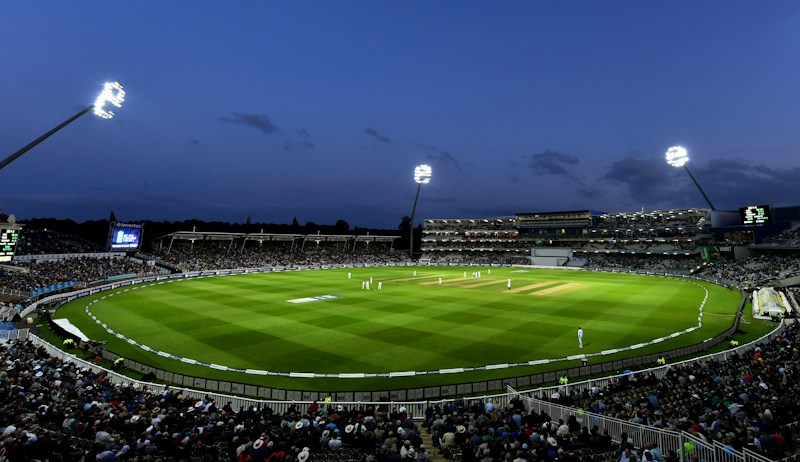


Captain Harmanpreet Singh and forward Sukhjeet Singh struck twice each as India continued their winning run at the Asian Champions Trophy, defeating a spirited China 5-2 in front of the home crowd at the Olympian Surjit Singh Hockey Stadium in Jalandhar on Thursday. The victory, India's second in as many matches, took the defending champions to the top of the six-team standings with six points and a goal difference of plus 16.

India, who had opened their campaign with a commanding 13-0 win over Bangladesh, had to work harder against a youthful Chinese side, but eventually secured a comfortable victory built on penalty-corner precision and moments of individual brilliance. Three of India's five goals came from penalty corners, a statistic that underlined both the team's set-piece strength and China's defensive resilience in open play.
The breakthrough arrived in the 12th minute through a superb finish from Sukhjeet. A long aerial pass from India's 25-yard line by Jugraj Singh was controlled just inside the circle by Sukhjeet, who carried it a couple of steps ahead on his stick before unleashing a rasping hit over the head of the advancing goalkeeper Huanyu Wu.
It was a goal of outstanding skill, the forward controlling a bouncing ball at pace and finishing from a difficult angle, and it finally gave India the lead their early pressure had deserved.
China, however, refused to fold. The visitors, who had lost their opening match 4-5 to Asian Games silver medallists Malaysia, levelled matters in the 26th minute when Yang Peng converted a penalty corner to make it 1-1. For a moment, with four minutes to go before half-time, coach Craig Fulton may have been concerned that his side was struggling to find gaps against an opponent he had admitted was largely unknown and difficult to plan against.
India's response was immediate and ruthless. A minute later, Harmanpreet restored the hosts' lead with a powerful, low drag-flick from a penalty corner, making it 2-1. The captain struck again just after the break, in the 31st minute, converting another penalty corner with a grounded flick to extend the lead to 3-1.
Two goals inside the first five minutes of the second half broke China's resistance, and three minutes later Sukhjeet completed his brace, finishing off a pass from Aditya Arjun Lalage after the latter had controlled an aerial ball from Harmanpreet near the halfway line. At 4-1, the contest looked over.
China pulled one back in the 36th minute, when Chen Chongcong converted their fourth penalty corner with a well-executed variation to make it 4-2 and keep the visitors in contention. But India had done enough, and Jugraj Singh sealed the 5-2 win with another penalty-corner goal in the 47th minute, capping a performance in which the set-piece unit repeatedly delivered when open play became congested.
The final scoreline read India 5 (Sukhjeet Singh 12, 34; Harmanpreet Singh 27-pc, 31-pc; Jugraj Singh 47-pc) beat China 2 (Yang Peng 26-pc; Chen Chongcong 36-pc). In the day's other matches, Malaysia beat Korea 3-1 and Japan beat Bangladesh 1-0, results that left India alone at the top of the standings after two rounds.
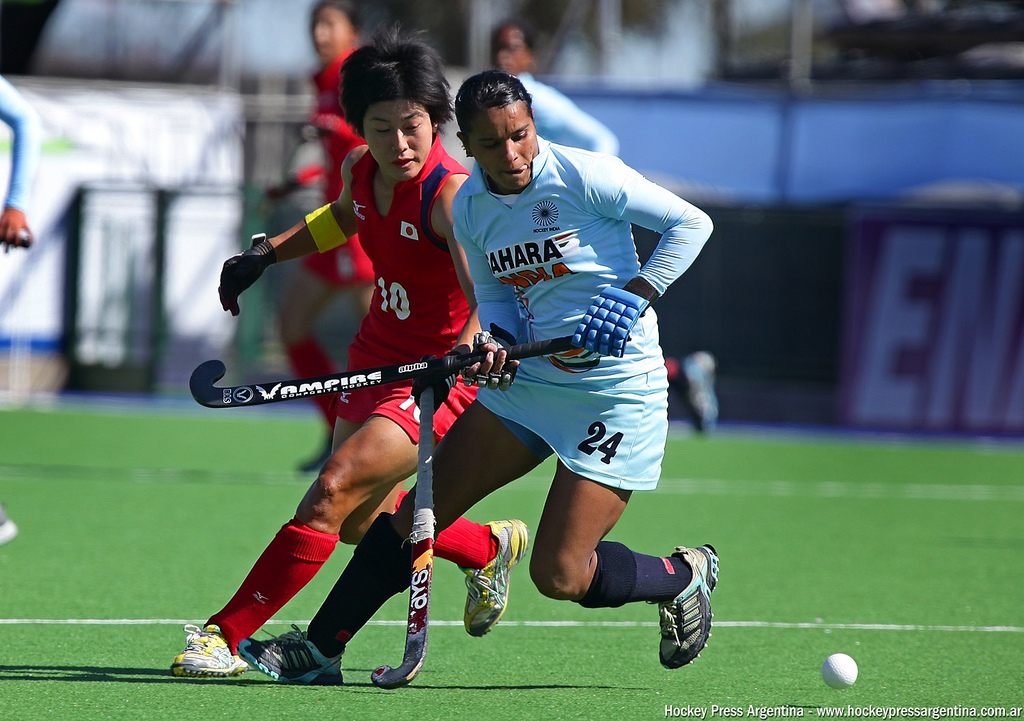
For Fulton, the match offered both encouragement and a warning. The encouragement lay in the firepower: two braces from his two most dangerous attackers, a fully functioning penalty-corner battery, and a second successive win. The warning lay in the periods when China frustrated India, particularly in the first quarter and again after the equaliser, when the hosts struggled to create clear chances against a compact, disciplined defence.
Against stronger opponents later in the tournament, those passages of frustration could prove costlier, and Fulton will want his side to find ways to unlock packed defences earlier.
The individual performances told their own story. Harmanpreet, the captain and the world's most feared drag-flicker, was clinical from set pieces, converting two of India's penalty corners with the authority that has made him the cornerstone of the team. Sukhjeet, named player of the match, combined a wonder goal with a poacher's second, and his partnership with Jugraj, whose long aerial passes repeatedly launched attacks, was central to India's attacking play.
Jugraj himself got on the scoresheet, a fitting reward for a performance in which his distribution from deep was as important as his goal.
India's start to the tournament has been emphatic. A 13-0 demolition of Bangladesh on Tuesday was followed by this 5-2 win, giving the hosts 18 goals in two matches and a goal difference that already looks formidable. The team entered the tournament as defending champions, and the early results suggest they intend to keep the title.
But the Asian Champions Trophy is a tournament where the group stage can mislead: the real test comes in the knockout rounds, where a single off day can undo a week of dominance.
The tournament continues on Friday, with India facing Japan at 1900 hrs IST at the same venue, while China take on South Korea. Japan, who beat Bangladesh 1-0 on Thursday, will present a different challenge: a technically sharp, quick-passing side that rarely beats itself. For India, the match is an opportunity to make it three wins from three and to tighten their grip on top spot before the business end of the competition.
For Chinese hockey, the defeat was a further lesson in the gap between promise and the top level. The young side pushed Malaysia close in their opener and held India for long stretches on Thursday, but they could not sustain their resistance against superior firepower. Their goals, both from penalty corners, showed that their set-piece routines are competitive; their task now is to convert spirited performances into points against South Korea.
For Indian hockey fans, Thursday evening in Jalandhar was another reminder of why this team commands such affection: a captain leading from the front, a young forward scoring goals of rare quality, and a home crowd roaring them on. If India can carry this form through the tournament, the Asian Champions Trophy may yet stay where it currently resides, with the defending champions.
(Reporting based on The Hindu and The Times of India.)