







Scientists in Hyderabad have identified critical weaknesses in the bacterium that causes tuberculosis, a discovery that could open the way to new treatments for one of the world's deadliest infectious diseases.

A team at the CSIR-Centre for Cellular and Molecular Biology (CCMB) mapped the machinery that Mycobacterium tuberculosis, the germ behind tuberculosis, uses to move proteins within and outside its cells. The researchers found that disrupting this transport system cripples the bacterium, pointing to fresh targets that future medicines could attack.
The finding carries particular weight for India, which accounts for nearly a quarter of tuberculosis cases worldwide and about a third of drug-resistant infections, according to the World Health Organisation's Global TB Report 2025. Tuberculosis remains among the leading causes of death from a single infectious agent across the globe, and the rise of strains that resist standard medicines has made the search for new drugs more urgent.
The research was led by CCMB Director Vinay Kumar Nandicoori. Priyadarshini Sanyal and Jagadeeshwari Uppada were the joint first authors of the study, working with scientists from the Institute of Mathematical Sciences in Chennai, led by Areejit Samal, and the Translational Health Science and Technology Institute in Faridabad.
At the heart of the study is a process that every living cell depends on: the transport of proteins. Proteins do much of the work inside a cell, but they must reach the right place to do it. In the tuberculosis bacterium, proteins have to be moved across membranes and out of the cell so the germ can feed, grow, protect itself and cause disease. The CCMB team set out to chart this transport network in full, and then to test which of its parts the bacterium cannot live without.
Using a combination of computational modelling and laboratory experiments, the researchers identified 92 key components and nearly 200 molecular reactions involved in the bacterium's protein transport network. The network includes the general Sec pathway, which handles most protein movement, the Twin-Arginine Translocation system, known as Tat, and the specialised ESX secretion systems that are characteristic of this group of bacteria.
The team then focused on two of the major routes, SecA1 and Tat, and used CRISPR-based gene-silencing technology to turn down their activity. The results were striking. Bacterial growth fell sharply, both in laboratory cultures and inside immune cells, showing that both pathways are essential for the pathogen's survival.
Further analysis revealed that switching off these systems disrupted the export of more than 100 proteins linked to the SecA1 pathway and around 140 proteins linked to the Tat system. The researchers also found damage to the bacterial cell membrane when the routes were blocked.
Dr Priyadarshini Sanyal said the analysis showed how deeply the bacterium depends on these transport routes, with the loss of protein export hitting a wide range of functions at once. That breadth of effect is what makes the pathways attractive as drug targets: a medicine that blocks them would not merely slow one process but undermine the germ's ability to sustain itself.
The findings have been published in the peer-reviewed journal Molecular & Cellular Proteomics. Publication in a peer-reviewed journal means the work has been scrutinised by independent experts before appearing in print, though the authors and other scientists stress that the road from a laboratory discovery to a medicine on pharmacy shelves is long.
Identifying a target is the first step; compounds that can hit it safely in the human body must then be found, tested and put through clinical trials, a process that typically takes several more years.
The urgency of that work is clear from the scale of the disease. Tuberculosis spreads through the air when a person with the disease in their lungs coughs or sneezes, and it most commonly affects the lungs, though it can strike other parts of the body. Standard treatment involves months of antibiotics, and patients must complete the full course for the cure to work.
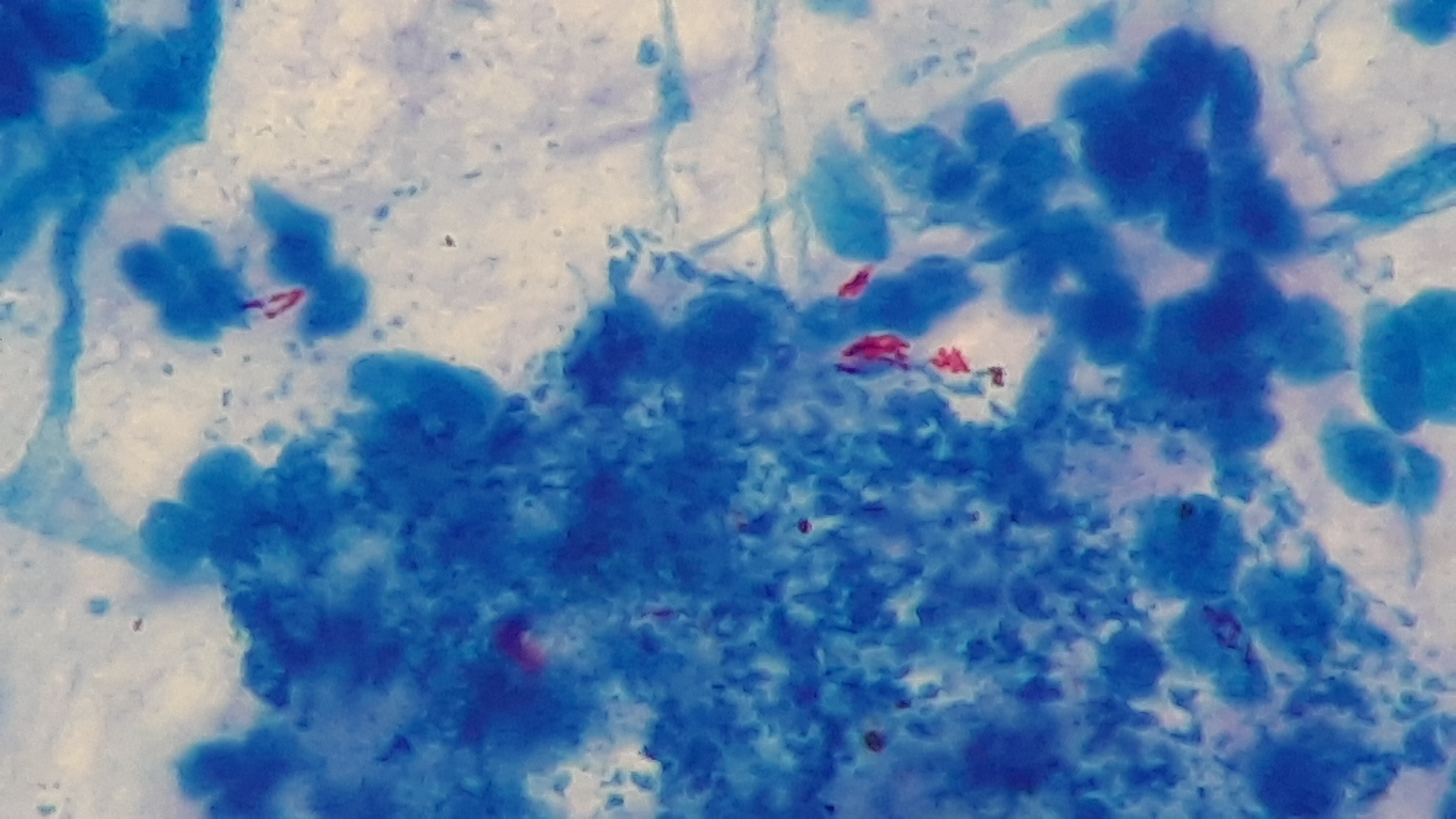
When treatment is interrupted or incomplete, the bacteria can survive and develop resistance, giving rise to strains that need longer, more expensive and more punishing courses of drugs.
Drug-resistant tuberculosis is a growing concern in India, which carries the world's largest tuberculosis burden. The country's national programme aims to eliminate the disease, and progress has been made in finding and treating cases, but the sheer number of infections, combined with delayed diagnosis in some areas and the challenge of making sure every patient finishes treatment, means the fight is far from over.
New drugs that work differently from existing ones would give doctors fresh options against resistant strains.
The CCMB study fits into a wider effort to understand the tuberculosis bacterium at a fundamental level. The institute, based in Hyderabad and part of the Council of Scientific and Industrial Research, has a long record of work on the disease, including earlier studies that used genetic tools to probe how the germ behaves.
In recent weeks, its scientists also reported a new genetic toolkit designed to make it easier to study the inner workings of mycobacteria, the family to which the tuberculosis germ belongs.
What sets the latest work apart is the scale of the map it produced. Rather than looking at a single protein or a single gene, the team assembled a picture of the whole transport network, counting its components and reactions and then testing which links matter most. That systems-level approach is increasingly common in biology, where understanding how parts interact can matter as much as knowing the parts themselves.
The involvement of mathematicians and computational biologists from Chennai underlines that shift. Modelling allowed the team to predict which components of the network were most important before testing those predictions in the laboratory, narrowing the search for the weak points that matter.
For patients and public health programmes, the practical payoff lies in the future. If drugs can be designed to jam the SecA1 and Tat pathways, they could offer a new way to kill the bacterium, including strains that have learned to withstand current medicines.
Such drugs would need to be safe for people, able to reach the bacteria hiding inside the body's cells, and effective when used alongside other medicines, since tuberculosis is treated with combinations of drugs to prevent resistance.
Researchers caution that none of this will happen quickly. But the identification of targets that the bacterium cannot do without is the essential starting point, and the CCMB team's map of the protein export network gives drug developers a detailed guide to where to aim.
The study also highlights the value of basic research carried out in India on a disease that weighs most heavily on India. The burden of tuberculosis falls hardest on low and middle income countries, and research priorities elsewhere in the world do not always match the needs of the places where the disease is most common. Work of this kind, led by Indian institutions and focused on the biology of the germ itself, helps close that gap.
As the findings circulate among scientists, the next steps will involve other laboratories testing the results and exploring whether compounds already known to science can interfere with the pathways the CCMB team has flagged. The hope is that, in time, the weak spots found in a Hyderabad laboratory will translate into treatments that reach the millions of people who still fall ill with tuberculosis every year.
(Reporting based on The Hindu and NewsBytes.)