







Auckland: India captain Shreyas Iyer won his fourth toss in a row on the tour and chose to bowl first against New Zealand in the fourth Twenty20 international at Eden Park, Auckland, on Friday, as the visitors chased a clean sweep in a series they already lead 3-0.

India made two changes to the side that sealed the series earlier in the week. Wicketkeeper-batter Ishan Kishan returned in place of Vaibhav Sooryavanshi, and fast bowler Mayank Yadav came in for Bhuvneshwar Kumar. New Zealand made one change of their own, bringing back seam-bowling all-rounder Nathan Smith in place of Kyle Jamieson.
The toss decision followed a pattern that has served India well throughout the series. Winning the toss, choosing to bowl first and chasing successfully has been the team's winning formula, and Iyer stuck with it at Eden Park. "We're going to bowl. Just following the same pattern. The intent, the positivity was there from ball one. The execution was phenomenal," Iyer said at the toss, adding that the wind was making conditions chillier and that he expected bounce and seam movement for his bowlers.
Kishan's return is a significant boost for India. The wicketkeeper-batter had missed the previous two matches because of a low-grade right adductor strain, commonly described as a groin strain, and his recovery restores a proven top-order option. His comeback meant that Sooryavanshi, the 15-year-old batting sensation, was left out despite an impressive 45 off just 19 deliveries in the third Twenty20 international.
That innings had helped India to a convincing six-wicket victory in the third match, which gave them an unassailable 3-0 lead in the five-match series.
The change also broke up a record opening combination. The opening stand that produced the highest powerplay total in Twenty20 international history, 118 runs, was split after just one game, as Kishan slotted back into the top order alongside Abhishek Sharma and Sanju Samson.
It is a measure of India's batting depth that a record-breaking partnership can be set aside for a returning senior player — and a sign of how highly the team management rates Kishan's experience in the middle of a series it is dominating.
Mayank Yadav's inclusion, meanwhile, adds raw pace to India's attack. He replaced Bhuvneshwar Kumar, the veteran seamer who has struggled to make a significant impact since returning to the Indian side. Mayank's pace offers a different threat on an Eden Park surface where bounce and seam movement were expected, and his selection suggests India want to test New Zealand's batters with speed rather than rely solely on swing and experience.
New Zealand, led by Mitchell Santner, also reshuffled. Nathan Smith returned in place of Kyle Jamieson, who will miss the remainder of the series as part of workload management. It is a like-for-like swap of seam-bowling all-rounders, but it further weakens a home pace attack already searching for answers against India's batting.
Santner acknowledged the challenge at the toss, noting that New Zealand come hard in the powerplay and that catching would be tough with the wind at Eden Park.
The hosts enter the match desperate for a win to avoid a potential whitewash on home soil. They have already lost the series, but a victory in Auckland would restore some pride and give their supporters something to celebrate after a difficult tour for the home side.
New Zealand had earlier made their highest-ever Twenty20 international total in Auckland, 243, and still lost that game — a statistic that captures both their batting capability and the scale of India's dominance in the series.
India's playing eleven for the match was: Abhishek Sharma, Sanju Samson (wicketkeeper), Ishan Kishan, Shreyas Iyer (captain), Tilak Varma, Nitish Kumar Reddy, Naman Dhir, Axar Patel, Arshdeep Singh, Mayank Yadav and Prince Yadav. New Zealand's eleven was: Finn Allen, Tim Seifert (wicketkeeper), Daryl Mitchell, Glenn Phillips, Bevon Jacobs, Michael Bracewell, Mitchell Santner (captain), Nathan Smith, Adam Milne, Jacob Duffy and Matthew Fisher.
The series context gives Friday's match a particular flavour. With the series already decided, the remaining games are about momentum, experimentation and pride. For India, a 4-0 lead would put a clean sweep within reach and extend a run of ruthless cricket that Iyer himself has emphasised — his message to the dressing room, repeated at the toss, has been that the team must stay ruthless and that everyone is in high spirits.
For New Zealand, the match is a chance to break the pattern, to defend a total or chase one successfully, and to show that the gap between the sides is narrower than the series scoreline suggests.
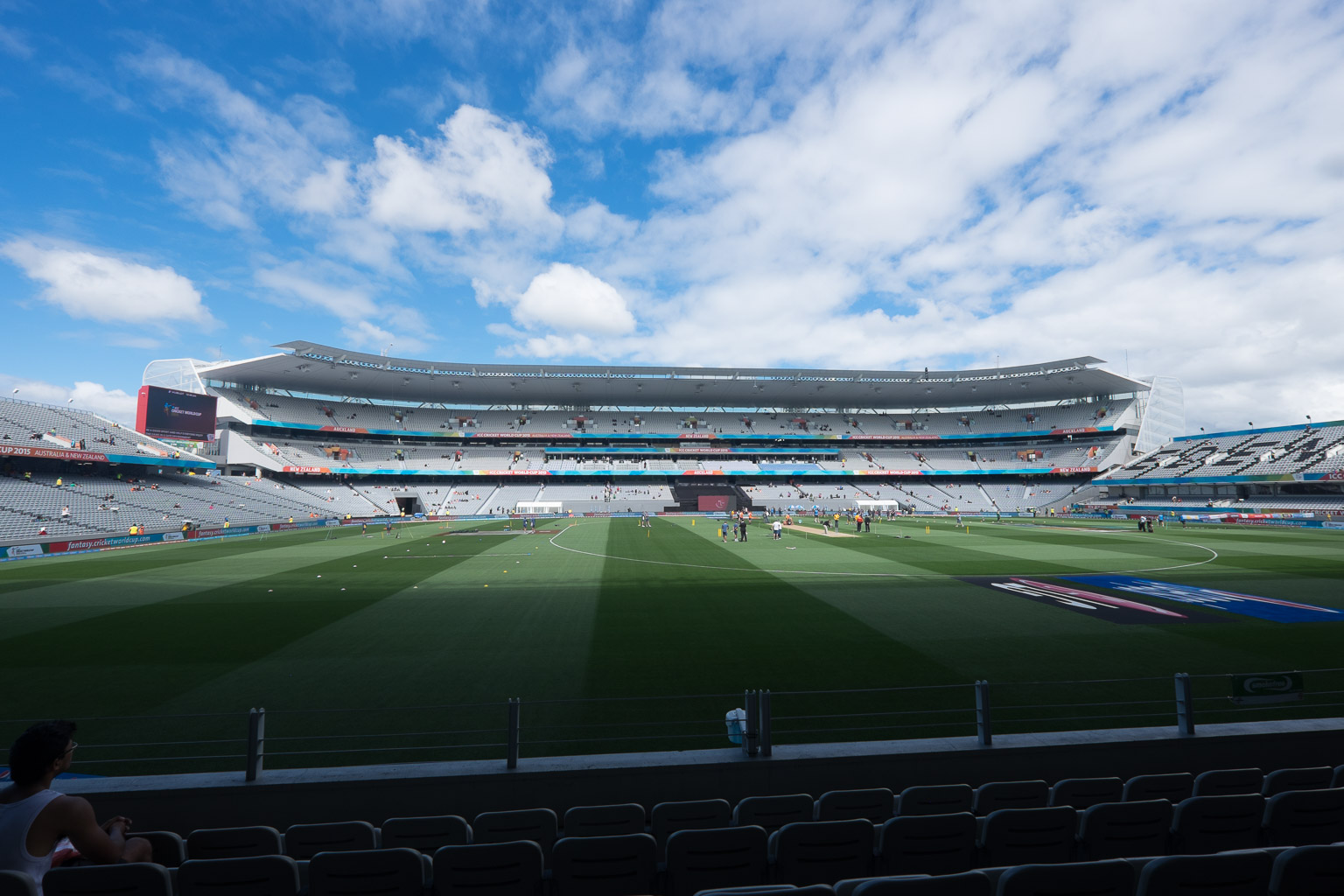
Eden Park itself adds to the occasion. The Auckland ground is one of world cricket's most distinctive venues, with short straight boundaries, a passionate crowd and conditions that often produce high scores. The wind that Iyer mentioned at the toss is a familiar Eden Park factor, swirling across the ground and making both catching and six-hitting unpredictable.
Bowlers who can adapt to it — varying pace, hitting the right lengths and using the breeze — tend to prosper, and India's decision to bowl first suggests they believe their attack can exploit the early movement before the pitch flattens.
Kishan, in particular, will be watched closely. Returning from injury into a side that is winning without him is never easy, but his ability to score quickly at the top of the order and to keep wicket gives India flexibility. If he finds form quickly, India will be even harder to stop. If he takes time to settle, New Zealand will sense an opening they have rarely been offered in this series.
For New Zealand, much will depend on their top order. Finn Allen and Tim Seifert can be destructive in the powerplay, and Daryl Mitchell and Glenn Phillips provide middle-order power. But they have struggled to put together a complete performance against an Indian attack that has been disciplined with the new ball and clever in the middle overs.
Nathan Smith's return gives Santner another seam option, and Adam Milne's pace remains a threat, but the hosts need early wickets to put pressure on a deep Indian batting line-up.
As the match began, the story was already clear: a dominant visiting side, unchanged in its approach, against a home side searching for a first win. Whether the toss decision and the two changes pay off for India, or whether New Zealand finally break through, will be decided on the field — but the team sheets alone told the story of a series in which one side is experimenting from strength and the other is searching for a way back.
(Reporting based on ESPNcricinfo and The Statesman.)