


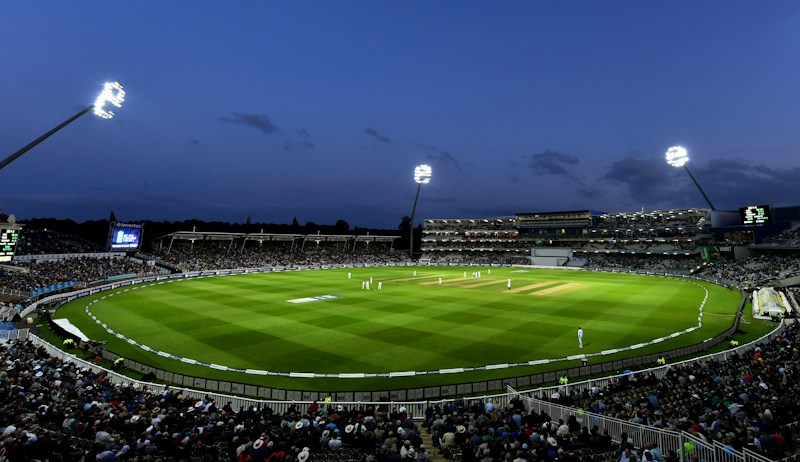


Mohali: India produced a spectacular late surge to beat Japan 4-1 in the final of the Asian Champions Trophy in Mohali on Thursday, defending their title and sealing a record sixth crown in the tournament. Trailing to an early goal and frustrated for almost three quarters, the hosts scored four times in the final 12 minutes of play to turn a 1-0 deficit into a commanding victory in front of a packed stadium.

The final, played at the Olympian Balbir Singh Senior International Hockey Stadium in Mohali, was the culmination of the ninth edition of the tournament, which ran from October 27 to November 5 across two Punjab cities, with the league stage in Jalandhar and the semi-finals and final in Mohali.
India went into the match as defending champions and favourites, having won the trophy in 2023 and 2024, but Japan, playing in their first final, had already shown they were not to be taken lightly.
Japan stunned the home crowd as early as the third minute, when Kazumasa Matsumoto found the net to put the visitors ahead. It was a goal that set the tone for much of the evening. For almost three quarters, India dominated possession, passed the ball around and repeatedly entered the opposition circle, only to mess up the final pass or shot.
The hosts looked, in the words of one report, like a headless chicken, running all across the field without reward, while Japan held their shape and protected their lead.
The breakthrough finally came in the 42nd minute, when Shilanand Lakra converted a penalty corner variation to bring India level and ignite the home crowd. The goal opened the floodgates. Dilpreet Singh put India ahead in the 48th minute with a field goal, giving the hosts the lead for the first time in the final.
Jugraj Singh extended the advantage from a penalty corner in the 52nd minute, and Vivek Sagar Prasad completed the scoring in the 54th minute with a powerful shot that the goalkeeper could not get down to. Four goals in 12 minutes had turned a 1-0 deficit into a 4-1 win, and the stadium erupted.
The victory gave India their sixth Asian Champions Trophy title, adding to the crowns won in 2011, 2016, 2018, 2023 and 2024. No other team has won the tournament more than twice, and India are the first side to lift the trophy three editions in a row. The triumph also completed an unbeaten campaign, with India winning every match across the league stage in Jalandhar and the knockouts in Mohali.
The final scoreline, 4-1, was the same as the league-stage meeting between the two sides in Jalandhar on October 30, when India had also beaten Japan by that margin.
The win was built on a collective effort. Standout performances came from Hardik Singh, who set up Dilpreet's goal, captain Harmanpreet Singh, and defender Amit Rohidas, among others, as India recovered from a sluggish start to overwhelm a resilient Japanese side. The manner of the win mattered as much as the result: after three quarters of frustration, the team found another gear in the closing quarter, scoring three goals in six minutes to seal the championship.

It was the kind of finish that championship teams produce, and it left the spectators who had packed the stadium on a weekday feeling they had got their money's worth.
Japan, meanwhile, were left to wait for a maiden title. They had reached the final by beating Malaysia 5-3 in a shootout following a goalless draw in their semi-final, and they defended with discipline for most of the final. Their early goal, and their ability to hold India at bay until the 42nd minute, showed how far they have come. But the late collapse, as India's pressure finally told, underlined the gap that remains between the continent's dominant team and the rest.
Earlier in the day, Malaysia defeated South Korea 5-2 to secure the bronze medal in the third-place play-off. The result rounded off a tournament that has showcased the strength of Asian hockey, with competitive matches across the board and a final that, for all its one-sided closing stages, was finely balanced for most of the evening.
India's path to the title had been commanding. In the semi-final, they thrashed South Korea 8-1 to storm into the final, a result that underlined their attacking firepower. Through the tournament, the hosts combined the experience of senior players with the energy of younger ones, and the depth of the squad allowed them to maintain intensity across a demanding schedule.
The unbeaten run, from the league stage in Jalandhar through to the final in Mohali, was a statement of dominance in a tournament India have now made their own.
The record is remarkable in the context of Asian hockey. Six titles, three of them in a row, and no other nation with more than two, place India in a class of their own in this competition. The Asian Champions Trophy, first held in 2011, has become a stage on which India regularly assert their superiority, and the 2026 edition extended that story.
For the players, the title is also a marker on the road to bigger targets, with the experience of winning under pressure — coming from behind in a final, in front of a home crowd — likely to prove valuable in the major tournaments that lie ahead.
The celebrations in Mohali on Thursday night reflected what the win meant to the home supporters. Hockey holds a special place in Punjab, and a final at the stadium named after Balbir Singh, one of the game's greats, carried its own resonance. The crowd had watched their team struggle, then surge, and the closing minutes, with goal after goal, turned anxiety into joy.
As the hooter sounded at full time, India had won 4-1, defended their Asian Champions Trophy title, and extended a record that no other team in the continent can match.
Beyond the trophy itself, the win reinforces the value of the squad's blend of youth and experience. Lakra, Dilpreet, Jugraj and Vivek, the four scorers on the night, represent the depth of talent now available to the team, and their ability to deliver under pressure in a final is the kind of evidence coaches look for when building towards bigger assignments. A title won the hard way, after going behind early, says more about a team than a comfortable victory ever could.
(Reporting based on The Hindu and Sportstar.)