







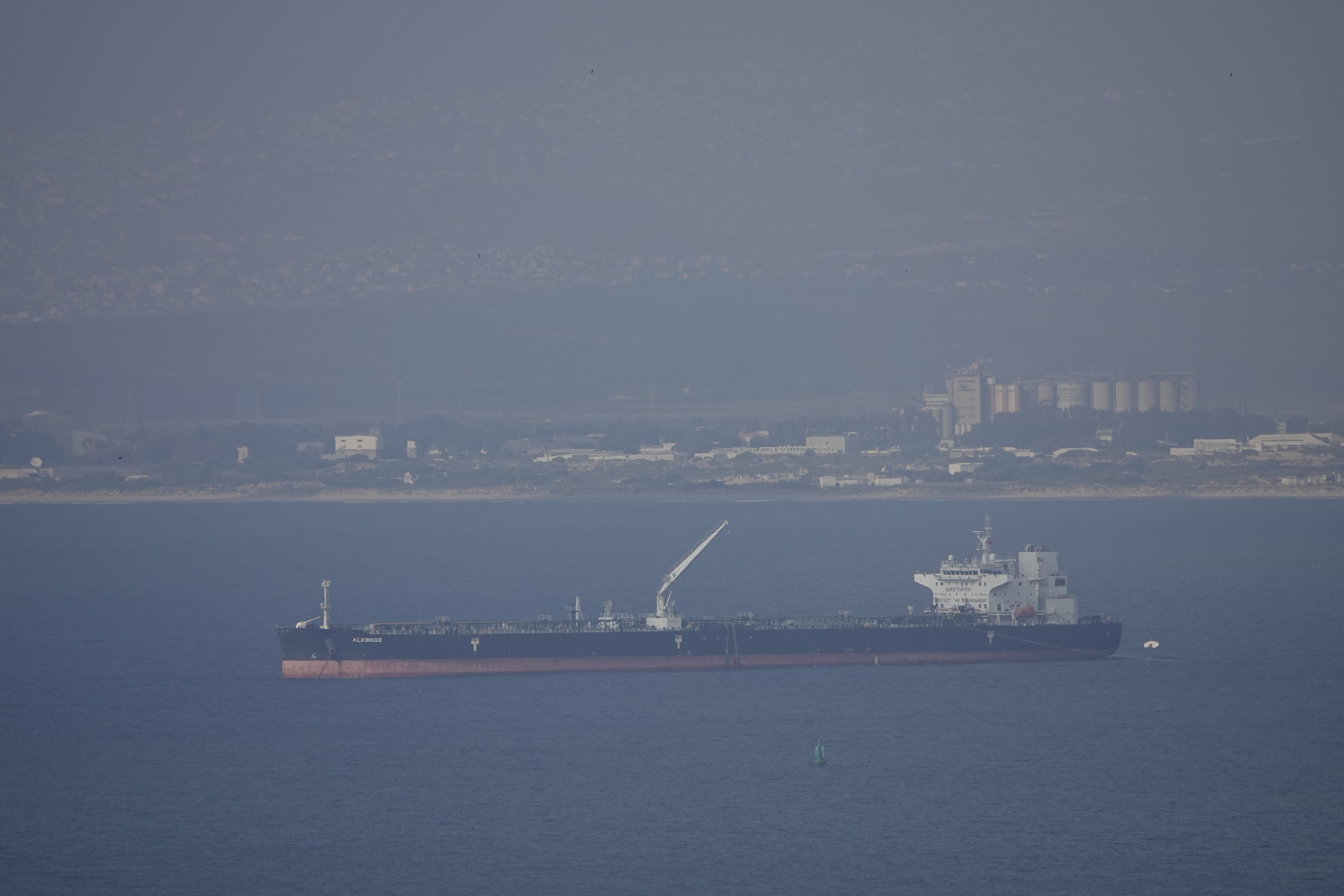
New Delhi, Nov 8: Indian Oil Corporation, India's largest oil refiner, plans to acquire its own crude oil and liquefied petroleum gas carriers as disruptions to shipping around the Strait of Hormuz push freight costs sharply higher and expose the risks in the way the country brings in its energy supplies.

The company's board has already approved the purchase of a few vessels, and tenders for the proposed acquisitions were issued several months ago, the company's Director of Finance, Anuj Jain, said during its second-quarter earnings call.
The move marks a significant shift in the shipping strategy of a company that has traditionally relied on a mix of time-chartered and voyage-chartered vessels to move the crude it refines and the cooking gas it distributes. Indian Oil is now examining three approaches to strengthen its logistics: getting more out of its existing charter arrangements, owning ships outright, and supporting the building of ships in India under the government's Make in India initiative.
The reason for the rethink is the dramatic change in what it costs to move a barrel of crude by sea. Indian Oil currently pays around 2 to 2.50 dollars per barrel for its time-chartered crude carriers, vessels hired on long-term contracts at agreed rates. In the spot market, where ships are hired for single voyages at prevailing prices, freight rates have climbed to as much as 8 to 10 dollars per barrel, roughly four times the chartered cost.
The gap is a direct result of the disruption to commercial shipping around the Strait of Hormuz, the narrow waterway between Iran and Oman through which a large share of the world's oil passes.
The squeeze is even sharper for liquefied petroleum gas, the cooking fuel used in millions of Indian homes. Freight rates that would normally be around 40 dollars a tonne have risen to 160 to 180 dollars a tonne in the spot market, Jain said. For a company that moves enormous volumes of fuel every day, that kind of increase adds up quickly, and it is ultimately felt in the cost of keeping India's refineries supplied and its kitchens cooking.
Indian Oil currently has three crude oil vessels and nine LPG vessels under time-charter arrangements, and those long-term contracts have proved their worth in the current crisis. Jain said the unusually high freight market had shown the value of the company's time-chartered vessels in securing supply and controlling costs, and that ownership was now being considered as an additional option.
Owning ships would give the company still greater control over when and how its crude arrives, and would insulate it further from sudden spikes in spot rates.
The shipping disruption is the result of the sharp escalation of tensions between the United States and Iran, which flared towards the end of February this year. The confrontation has raised the risk of interference with commercial shipping in the Gulf, pushing up both freight rates and war-risk insurance premiums for vessels passing through the region.
For India, which imports the overwhelming bulk of the crude it consumes, the stakes are high: any sustained disruption in the Gulf can quickly translate into higher costs and tighter supplies at home.
The pressure is visible in the price of crude itself. Indian basket crude, the mix of grades that India buys, averaged around 65 to 70 dollars a barrel in February. It stayed above 100 dollars for much of the first quarter and averaged about 120 dollars a barrel in October, according to Jain.
That rise has fed through into the economics of refining and into the import bill, even though Indian Oil reported a strong September quarter, with a net profit of 21,630 crore rupees supported by inventory gains and improved business performance.
The company's sourcing pattern has also shifted during the crisis. Russia supplied 55 per cent of Indian Oil's crude requirements in the first half of the current financial year, with the Middle East accounting for 24 per cent, Africa about 10 per cent, Brazil 7 per cent, the United States 2 to 5 per cent and Venezuela 3 to 4 per cent.
Spot purchases, bought on the open market rather than under long-term contracts, rose from about 50 per cent of crude sourcing last year to around 87 per cent in the first half of this financial year, a sign of how actively the company has had to shop around for barrels as traditional supply routes came under strain.
That flexibility has helped keep the refineries running, but it has also increased the company's exposure to the spot shipping market, which is exactly where freight rates have exploded. Buying ships of its own would be one way to reduce that exposure, by giving Indian Oil a fleet it controls directly rather than one it must hire at whatever price the market demands on a given day.
The idea of building ships in India adds a longer-term dimension to the plan. India has been trying for years to revive its shipbuilding industry, and the government has spoken of the need for the country to own more of the vessels that carry its trade.
For the state-owned oil companies, which together move some of the largest volumes of cargo into the country, investing in Indian-built tankers would serve both energy security and industrial policy, though the company has not yet given a detailed timeline or a specific investment figure for the shipbuilding part of the plan.
Analysts say the logic of the move is straightforward, but its execution will take time. Buying tankers is expensive, and building them in India would take longer still, given the limited capacity of domestic yards for large crude carriers. In the near term, Indian Oil will have to manage with a combination of charters, spot hires and the vessels it already controls, while the board-approved purchases work their way through tendering and delivery.
The wider context is that India is the world's third-largest consumer of oil and imports more than 85 per cent of its crude, making shipping one of the most sensitive links in its energy chain. The Strait of Hormuz carries roughly a fifth of the world's petroleum liquids, and any threat to it reverberates through prices everywhere.
When freight rates quadruple, as they have this year, the cost does not stay with the shipping companies; it flows into refinery margins, pump prices and, eventually, the household budget.
For Indian Oil, the ship purchase plan is therefore about more than saving money on freight. It is about reducing the country's vulnerability to a chokepoint thousands of kilometres away, and about making sure that the company that supplies much of India's fuel can keep its refineries fed even when the seas around the Gulf are troubled. Whether the plan delivers on that promise will depend on how quickly vessels can be bought or built, and at what price.
But the board's approval, disclosed on the earnings call, shows that the thinking inside India's largest refiner has already changed.
(Reporting based on Moneycontrol, The Times of India and The Economic Times.)