







With a reported budget of 40 billion Indian rupees, or about 420 million dollars, the two-part Ramayana is the most expensive film ever made in India. It is also one of the biggest gambles in the history of Indian cinema: a test of whether a story rooted in Indian religious tradition can draw audiences worldwide, and whether India's film industry can produce a global blockbuster on the scale of Hollywood's largest franchises.

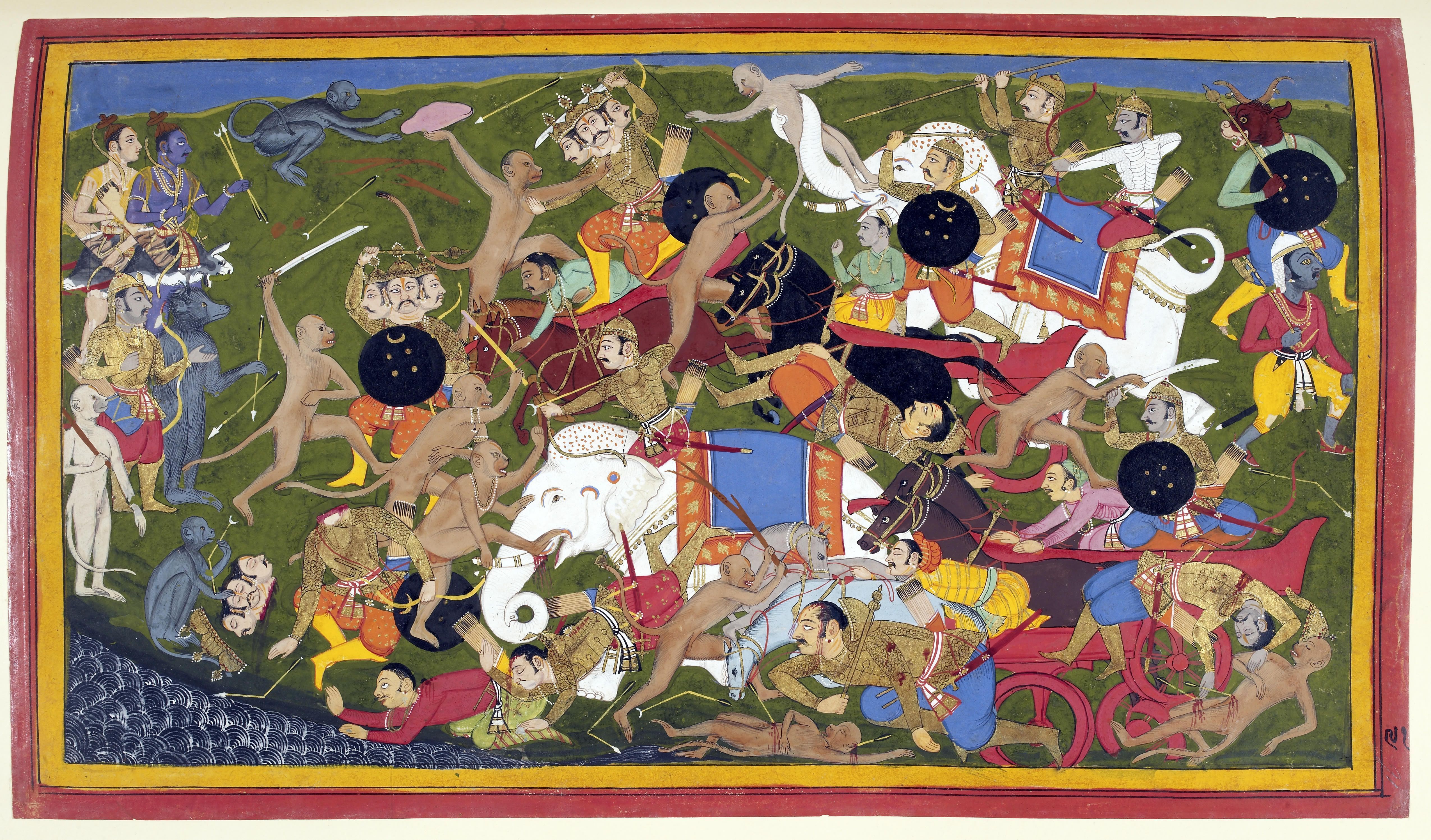
The film retells the mythological story of Prince Rama's quest to save his wife Sita from the demon king Ravana, inspired by the ancient Sanskrit epic widely regarded as sacred scripture in Hinduism. The first instalment, titled Ramayana: Rise of a Legend, debuted globally on November 5, with a release in the United States the following day.
It held its global premiere in Los Angeles on October 27, drawing praise for its visuals and performances, as well as criticism over its slow pacing and a score that divided critics.
The film is directed by Nitesh Tiwari, from a screenplay by Tiwari and Shridhar Raghavan, and stars Ranbir Kapoor as Rama, Sai Pallavi as Sita and the Kannada cinema superstar Yash, making his Bollywood debut, as Ravana. It is the brainchild of producer Namit Malhotra, whose Mumbai-based Prime Focus Studios made the film with Yash's Monster Mind Creations, and Sony Pictures is the international distributor.
Malhotra's visual effects arm, DNEG, has won eight Academy Awards for work on films including Inception and Dune, and the film draws on Oscar-winning talent in visual effects and music, with its score co-composed by A.R. Rahman and Hans Zimmer, the latter working on an Indian production for the first time.
Malhotra has branded the film India's answer to Star Wars and The Lord of the Rings, calling it the largest production in the history of Indian cinema. The comparison is deliberate. The makers present Ramayana as an unprecedented fusion of homegrown and Hollywood talent, and as India's first truly global release, aimed at international audiences as much as at the movie-mad country of 1.4 billion people.
The film was made in Hindi and English versions, and it has been dubbed into nearly 40 languages.
The early box office numbers suggest the gamble is paying off, at least in commercial terms. The film grossed 55.7 million dollars globally during its opening weekend, according to Variety, and it has since passed 100 million dollars at the global box office in less than a full week in theatres.
According to Deadline, its cumulative global gross reached 101.9 million dollars, comprising 67.1 million dollars from the Indian box office, 17.7 million dollars from theatres in the United States and a further 16.9 million dollars from other international markets.
That total makes it one of just 47 movies to have passed the 100 million dollar milestone in 2026, and it has already become the 11th highest-grossing Indian movie in history worldwide, with a global gross of 945.49 crore rupees, surpassing several major hits.
It was also the first Indian film to top the United Kingdom box office, a milestone its makers have highlighted as evidence that the film is travelling beyond its home audience. For its opening weekend, the film played on 59,000 screens worldwide, including 4,500 screens in the United States, a release on a scale few Indian films have ever attempted.
The critical response has been more divided. The film currently holds a 77 per cent critic score and a 94 per cent audience score on Rotten Tomatoes, a gap that captures the split between reviewers and viewers. Critics have praised the visuals and the performances while finding fault with the slow pacing and a score that some found divisive.
The film has also drawn criticism over its use of artificial intelligence: AI was used to adjust lip-syncing for the dubbed versions, while human performers recorded every line of dialogue, a distinction some American critics brushed aside, calling the computer-generated imagery and AI lip-syncing clumsy. Two different cuts are running in America, including a shorter English version missing its musical numbers.
The film's scale is what sets it apart. Its reported budget of 4,000 crore rupees considerably surpasses the second most expensive Indian production, director S.S. Rajamouli's forthcoming Varanasi, budgeted at 1,400 crore rupees. The Ramayana budget covers both parts of the planned two-part spectacle, but even so, the figure is far beyond anything Indian cinema has attempted before.
The project has been more than a decade in the making, and its makers believe it heralds a breakout moment globally for India's film industry, which has yet to win an Oscar in the coveted film categories.
That ambition places Ramayana in a line of recent Indian films that have tried to carry Indian stories to the world. Rajamouli's Baahubali films established a lucrative standard for dubbing regional releases into Hindi and for exporting Indian spectacles with English subtitles, and his 2022 anti-colonial epic RRR delivered a cross-cultural moment that few Indian films had managed before.
Ramayana follows that path but goes further, pairing Indian mythology with Hollywood craft at a budget that rivals the largest studio productions anywhere.
The film also arrives at a moment when Indian cinema is changing. Long dominated by mass-market Hindi-language Bollywood, the industry churns out around 2,000 films each year and has been expanding its global appeal, with regional industries in the south producing some of its biggest recent hits.
Ramayana, made by a Mumbai studio with a Kannada star as its villain and a global distributor behind it, is in many ways a product of that more integrated industry, and its success or failure will be read as a verdict on whether Indian cinema can compete at the very top of the global box office.
Whether the film ultimately succeeds as a global hit will depend on more than its opening week. The first instalment has done the hard part, drawing audiences in India and abroad and passing 100 million dollars faster than almost any Indian film before it. But the second part is yet to come, and the full 420 million dollar bet will only be judged when both films have played out.
The makers have also had to answer questions about the film's treatment of a sacred text, its use of AI, and whether a mythological epic can hold the attention of audiences who do not know the story.
For now, the numbers tell a striking story: the most expensive Indian film ever made has become the first Indian film to top the British box office, has drawn more than 100 million dollars worldwide in its first week, and has given India's film industry its clearest evidence yet that a story from its own epics can travel.
Whether that is the beginning of a new era for Indian cinema, or a one-off spectacle that proves difficult to repeat, is the question the second part of Ramayana will have to answer.
(Reporting based on Fortune, The Straits Times and Screen Rant.)