







NEW DELHI: Refineries in India and two other countries that process Russian crude shipped oil products worth 1 billion euros (about 1.2 billion dollars) to sanctioning countries in September, a jump of 43 per cent from August, according to a report from the Centre for Research on Energy and Clean Air (CREA).

The findings underline how refined fuels with Russian origins continue to reach Western markets despite months of sanctions pressure aimed at cutting Moscow's energy revenues.
The report covers refineries in India, Turkiye and Brunei, and it tracks where their refined products ended up in September 2026. The European Union was by far the biggest destination, taking 667 million euros' worth of their products. Australia imported 168 million euros' worth, the United States 154 million euros' worth, and New Zealand 19 million euros' worth. CREA estimated that 295 million euros of the total was refined from Russian crude.
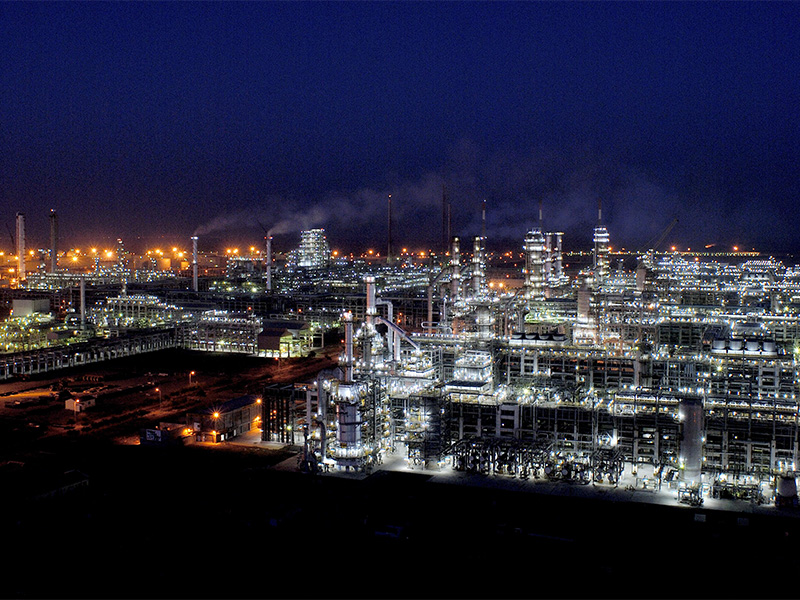
At the centre of the story is Reliance Industries Ltd's Jamnagar refinery in Gujarat, one of the world's largest refining complexes. The report says Jamnagar supplied six of the seven cargoes that were unloaded at EU ports during September, even though the European Union has banned imports of oil products made from Russian crude since January 2026.
Exports reported as destined for EU ports from refineries that run on Russian crude rose 80 per cent in value month on month, according to CREA. Among them was a single 104,000-tonne cargo of gasoil, a form of diesel, from Jamnagar that was still en route to Rotterdam at the time of the report. Jamnagar also accounted for the largest US-bound exports of the facilities covered by the report, worth 122 million euros.
Russian crude made up 32 per cent of Jamnagar's crude oil imports between July and September.
The breakdown of the EU-bound shipments shows Italy receiving three of the seven consignments unloaded at EU ports, Romania receiving two, and Spain and Cyprus one each. These are all markets that fall squarely within the sanctions regime, and the arrivals highlight what CREA describes as a persistent enforcement gap in the bloc's restrictions.
The EU's ban on importing oil products refined from Russian crude, which came into force in January 2026, contains an exemption for net crude exporters. CREA argues that this exemption leaves a significant loophole, because a country's status as a net exporter of crude does not prevent its refineries from processing Russian-origin crude and selling the finished fuel to Europe.
In other words, the ban looks at where the crude comes from at the country level, not at what individual refineries are feeding into their units.
The report calls for applying the ban at the refinery level instead, which would bar products from any plant that has processed Russian crude in the previous six months, whatever the declared origin of the product. That proposal remains a recommendation from an advocacy group and has not been adopted as EU policy. European governments have so far been cautious about measures that could tighten fuel supplies and push up prices at home.
What makes the September figures striking is that they arrived alongside a fall in India's own purchases of Russian crude. The same CREA report says India's Russian crude imports declined 13 per cent in September, the second straight monthly drop and the lowest level since April. Intake fell at all three of India's largest importing refineries: Jamnagar by 27 per cent, Indian Oil Corporation's Paradip refinery by 21 per cent, and Nayara Energy's Vadinar refinery by 8 per cent.
Despite the decline, Vadinar overtook Jamnagar as India's largest importer of Russian crude in the month.
Imports at smaller Indian installations mostly trended downwards as well. The HMEL Mundra oil terminal and the Kochi refinery lowered their Russian crude intakes by 74 per cent and 32 per cent respectively from August to September. The main exception was the IOC Mundra oil terminal, which received 570,000 tonnes of Russian crude in September after receiving none at all in August, according to CREA.
Analysts at energy data firm Kpler say the fall in volumes partly reflects tighter supply and stronger Chinese competition for Russian barrels, rather than US pressure alone. They expect India's October imports to hold steady at 1.8 to 1.9 million barrels per day, suggesting the decline may be a pause rather than a lasting shift.
Even with the drop, India remained Russia's second-largest fossil fuel customer in September 2026, importing a total of 4.1 billion euros of Russian hydrocarbons. Crude oil constituted 88 per cent of those purchases, totalling 3.6 billion euros, while coal at 309 million euros and oil products at 161 million euros made up the remainder, CREA said. Only China bought more Russian energy.
Since December 2022, India has taken 37 per cent of Russia's crude exports, against China's 50 per cent, cementing its position as Moscow's second most important oil customer.
The transformation of India's oil trade since 2022 has been dramatic. Before the invasion of Ukraine, India was a marginal buyer of Russian oil. It became a top customer as Western buyers retreated from Moscow and Russia offered its crude at steep discounts. In September, Urals crude, Russia's flagship grade, averaged 90.7 dollars a barrel but still traded 23 dollars below the global Brent benchmark, a discount that was unchanged from August.
That discount has been the engine of the entire trade. Indian refiners, both private and state-owned, have been able to buy Russian crude cheaply, process it in their plants, and sell refined diesel, jet fuel and other products at world prices, including to Western buyers. The margin has made the trade enormously profitable even as it has drawn sustained diplomatic pressure, particularly from Washington.
The pressure has been real and public. US President Donald Trump has repeatedly targeted India's Russian oil purchases with punitive tariffs, and earlier this year he claimed on social media that New Delhi had agreed to stop buying Russian oil as part of a trade deal, a claim the Indian government has yet to clarify.
Under that deal, the United States agreed to lower its reciprocal tariff on Indian goods from 50 per cent, among the highest in the world, to 18 per cent, removing a 25 per cent penal tariff that had been slapped on India specifically for its Russian oil purchases. analysts have estimated that losing access to discounted Russian crude could add 3 to 4 billion dollars a year to India's oil import bill.
The September data suggests Indian refiners are caught between two opposing forces. Diplomatic and tariff pressure from Washington is encouraging a move away from Russian barrels, and several major refineries have cut intake. Yet the refining economics remain compelling, and the finished products continue to find buyers in Europe, America and Australia, where demand for diesel and other fuels remains firm.
In June, a similar CREA report found that refineries in India, Turkiye, Brunei and Georgia had exported oil products worth 814 million euros to sanctioning countries, of which an estimated 369 million euros' worth had been refined from Russian crude.
It also noted that the United Kingdom had received its first cargo of jet fuel from Jamnagar after London allowed imports of diesel and jet fuel refined from Russian crude under an exemption, a shipment of about 63 million euros unloaded at Thames Haven and the Isle of Grain.
That episode illustrated how fragmented Western policy has been. While the EU has imposed its ban, Britain carved out an exemption for refined products, and the net-exporter exemption in the EU's own rules has allowed cargoes to keep flowing legally into European ports. CREA's latest figures suggest the flow has not only continued but accelerated into the autumn.
For European policymakers, the September numbers present an awkward picture. The EU banned the products to starve Moscow of revenue, yet fuel refined in plants that run on Russian crude is arriving at its own ports in growing volumes. Whether Brussels responds by tightening the rules to the refinery level, as CREA recommends, or holds back for fear of supply disruptions and higher fuel prices, will be one of the key energy policy decisions of the coming months.
For India, the data captures a trade that has become both strategically important and politically costly. Cheap Russian crude has helped keep India's fuel prices in check and turned its refineries into some of the world's most profitable, while exports of refined products have become a major revenue stream.
But the trade has strained relations with Washington at a sensitive moment in bilateral negotiations, and it has placed India's refiners at the centre of an international debate about the true effectiveness of sanctions.
As winter approaches in the northern hemisphere and fuel demand rises, the flow of refined products from India and the other covered refineries will be watched closely on both sides. CREA's report suggests that until the rules change, the trade will continue to find a way.
(Reporting based on The Hindu and The Hindu BusinessLine.)