







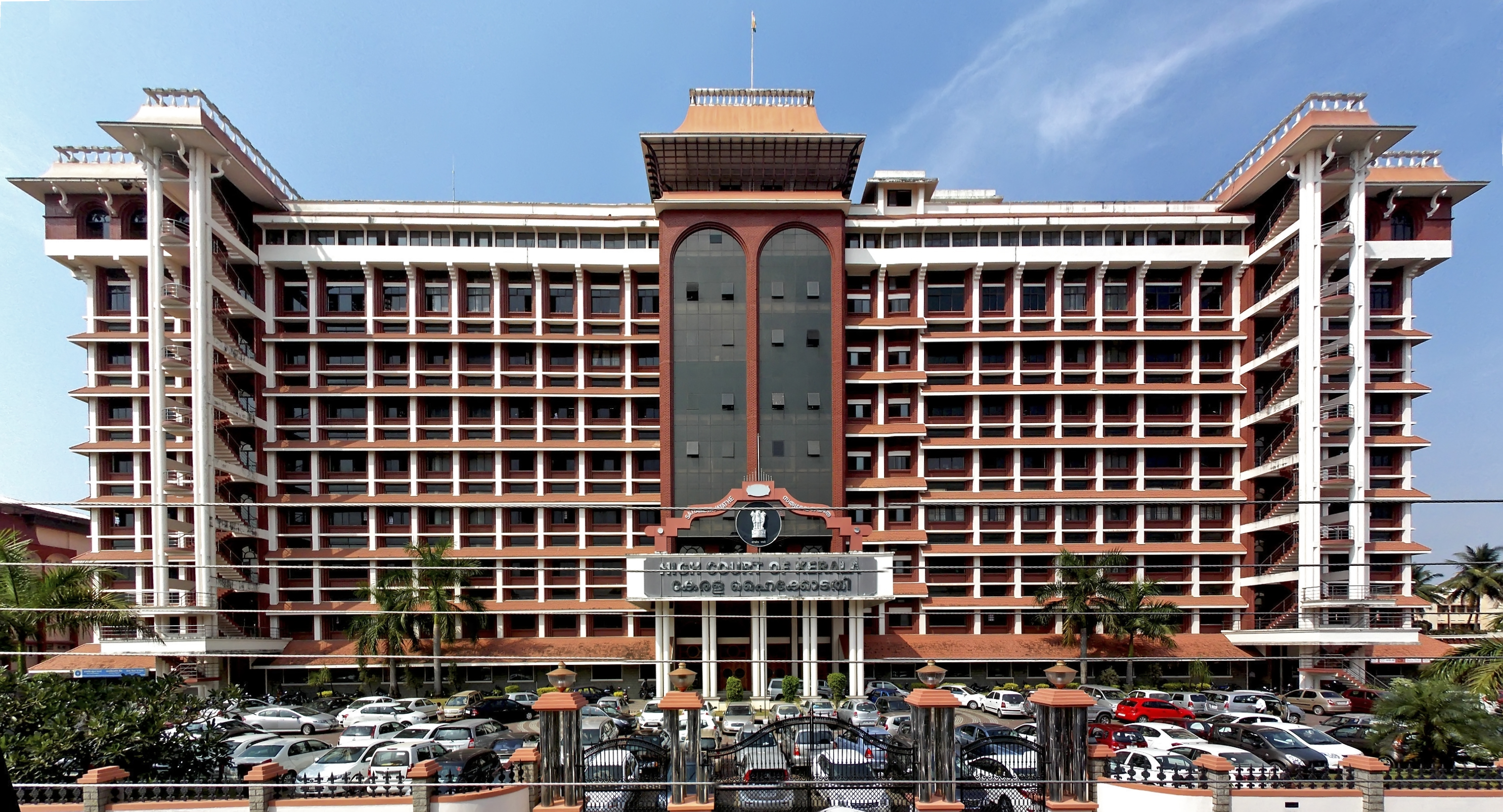
The Kerala High Court on Thursday granted interim protection from arrest to an additional district judge who has been booked in connection with a fatal road accident in Kochi involving his 17-year-old son, ruling that the police shall not arrest him until further orders while directing him to cooperate fully with the investigation.

Justice Kauser Edappagath passed the order on an anticipatory bail plea filed by the judicial officer, who is posted at the Motor Accidents Claims Tribunal in Irinjalakuda in Thrissur district. The court's order directed the judge to appear before the investigating officer at 1 pm on Thursday and thereafter as and when called, and it specified that any interrogation must be conducted in accordance with the guidelines laid down by the Supreme Court.
The court also asked the prosecutor to furnish the state's response to the plea.
The case arises from a crash that took place in the early hours of Sunday, October 25, at Cheranalloor in Kochi. According to police and news reports, a Mercedes-Benz allegedly driven by the judge's teenage son collided with a scooter on Container Road near Maraparamb. The scooter rider, Jayabalakrishnan, aged 55, died in the accident.
He ran a roadside eatery and was heading home after closing his shop when the crash occurred at around 2.20 am. Both vehicles were reported to be travelling towards Kalamassery.
The death of a man returning from a night's work at his small food business has made the case deeply emotive in Kerala, and the fact that the teenager's father is a serving judicial officer has added a layer of public scrutiny. Police named the judge as an accused on Monday, following protests by the victim's family over what they described as preferential treatment for the teenager.
The judge is the registered owner of the car, and police invoked provisions of the Bharatiya Nyaya Sanhita and the Motor Vehicles Act, including provisions that can hold a juvenile's guardian or the vehicle's owner liable in certain circumstances where a minor is found to have driven a vehicle.
Senior advocate P Vijaya Bhanu, appearing for the judge, told the high court that his client had already appeared before the police on Wednesday and had been interrogated for more than four hours. He said another notice directing the judge to appear for further questioning had since been issued.
Questioning the need for continued custodial interrogation, the bench remarked on the length of the questioning already undertaken and asked why arrest was required when the applicant was a judicial officer who would cooperate with the investigation. The court observed that there was no scope for custodial interrogation in the circumstances and that the applicant, as a serving district judge, was not a person likely to abscond or evade the process of law.
Counsel representing the legal heirs of the accident victim opposed the plea. They alleged that the judge had tampered with evidence after learning about the crash. That allegation is contested and has not been determined by the court; the interim order does not decide the merits of the case, and the court made clear that it had to proceed strictly in accordance with the law.
The protection granted is temporary, lasting until further orders, and the state's response will be relevant to what happens next in the anticipatory bail proceedings.
The victim's family has pursued the case vigorously. Relatives of Jayabalakrishnan had earlier met the high court's Registrar General to seek stringent action, and his daughter has publicly questioned whether the investigation was being handled even-handedly, contrasting her father's modest occupation with the position held by the teenager's father.
Her remarks, widely reported, capture a sentiment that often surrounds cases involving influential families: a fear that procedure may bend for the powerful while ordinary families wait for justice. The court's emphasis on proceeding strictly according to law, and its direction that interrogation follow Supreme Court guidelines, can be read as an attempt to anchor the proceedings in formal safeguards that apply regardless of who the accused happens to be.
The legal framework around juveniles and vehicles is central to the case. Under the Motor Vehicles Act, a guardian or vehicle owner can face liability when a juvenile drives in contravention of the law, with a presumption in certain circumstances that the minor drove with the guardian's or owner's consent. The police have also invoked culpable homicide provisions in the Bharatiya Nyaya Sanhita.
How those provisions apply to a parent who was not driving, and what the prosecution must prove about knowledge, consent, or negligence, will be among the key questions as the investigation and any subsequent proceedings unfold. Legal observers will also watch how the courts handle the separate question of the minor's own liability, which is governed by distinct procedures for juveniles in conflict with the law.
Beyond the courtroom, the case has renewed debate about underage driving, road safety, and accountability in Kerala.
A 17-year-old allegedly at the wheel of a luxury car in the middle of the night, a scooter rider killed on his way home from work, and a judicial officer father named as an accused: each element has fuelled discussion about how easily minors gain access to vehicles, how effectively the law deters guardians from allowing it, and whether enforcement is consistent across social strata.
Road safety campaigners have long argued that penalties for owners who permit underage driving need to be applied firmly and visibly, because the deterrent effect depends less on the severity of the law on paper than on the certainty that it will be enforced.
At the same time, the interim protection order illustrates a routine but important feature of criminal procedure: anticipatory bail and interim protection are not acquittals. They are safeguards against arrest while the court considers whether custodial interrogation is necessary, and they come with conditions, here including mandatory appearance before investigators and compliance with Supreme Court guidelines on interrogation.
The judge must present himself for questioning, and the investigation continues. The police retain the ability to seek the state's response, place further material before the court, and argue for a different outcome at the next hearing.
For the family of Jayabalakrishnan, the legal process will understandably feel slow. They have lost a breadwinner who ran a small eatery, and their public statements convey grief mixed with a demand for accountability. The coming hearings will test whether the investigation can satisfy that demand while also respecting the procedural rights of the accused, including a judicial officer whose own position makes the case unusually sensitive for the institutions involved.
What is certain at this stage is limited but significant. A man is dead after a late-night collision in Kochi. A teenager is alleged to have been driving.
His father, a serving additional district judge, has been booked and has now received interim protection from arrest from the Kerala High Court, with directions to cooperate with the probe. The investigation is continuing, the state's response is awaited, and the question of criminal responsibility, for the driver and for anyone else, remains before the courts.
(Reporting based on The Times of India, Live Law and Bar and Bench.)