







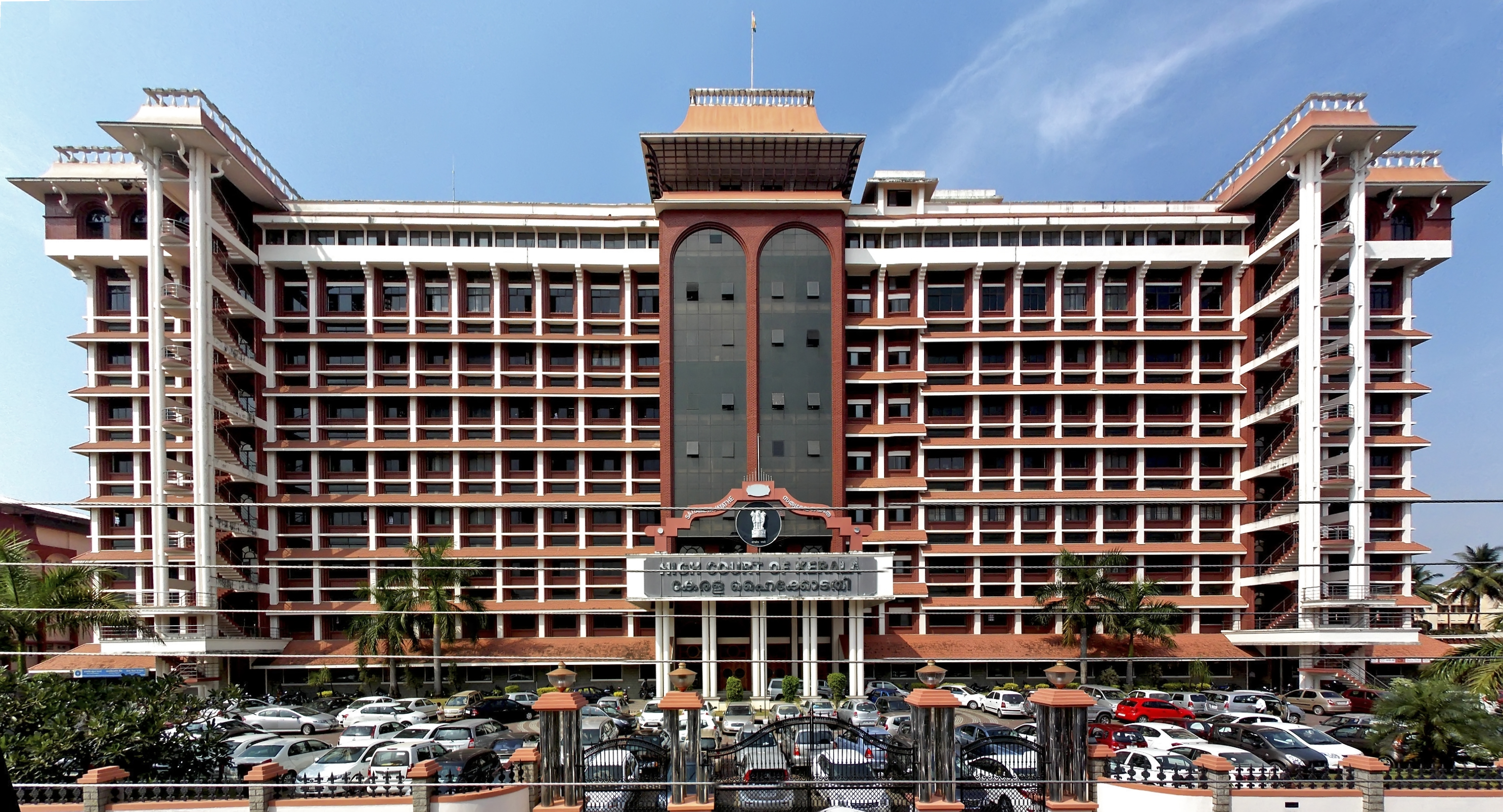
Chief Justice of India Surya Kant on Sunday, November 1, 2026, inaugurated the platinum jubilee celebrations of the Kerala High Court in Kochi, marking seventy years since the court came into being on November 1, 1956.

In an address that ranged across the history of the institution, the role of High Courts in constitutional justice and the place of women in the judiciary, the Chief Justice gave full credit to the Kerala High Court for inspiring the Supreme Court's recent push for greater representation of women on the Bench and in Bar bodies.
The Chief Justice quoted the examples of pioneering women judges who began their journeys at the Kerala High Court. Justice Anna Chandy became India's first woman High Court judge, and Justice M. Fathima Beevi, who also began at the Kerala High Court, went on to become the first woman judge of the Supreme Court. For Justice Kant, those two names were not merely historical footnotes.
They were evidence of a pragmatic and progressive approach that, in his words, had influenced the collegium and the apex court itself.
"It seems to me that after I took over as Chief Justice of India, the collegium must have been influenced by this pragmatic and progressive approach of the Kerala High Court as we have been able to bring two distinguished women judges to Supreme Court in the recent time," the Chief Justice said. He added that the influence went beyond the Bench.
On the judicial side, he said, he had not only passed an order but had persuaded the majority of the State Bar Councils, the Bar Council of India and the District and High Court Bar Associations to ensure thirty per cent representation for women members of the Bar.
The Chief Justice's remarks touched on a long-standing feature of the Indian legal profession. For decades, Bar Associations and Bar Councils were, in his phrase, on the lighter side named as "Men's Club", and the higher judiciary remained largely dominated by men.
The Kerala High Court, he argued, had set an example at a time when that dominance was at its strongest, and that example had prompted and persuaded the apex institution of the country to provide formidable, fair and effective representation to women members of the Bar, whether on the question of the Bench or on the question of effective representation in Bar Councils and Bar Associations.
The platinum jubilee itself was an occasion for the court to look back on its institutional journey and forward to the responsibilities awaiting it.
The celebrations included the inauguration of the Kerala High Court Advocates' Association Benevolent Scheme 2026, the honouring of Advocate P. B. Menon, who was recently designated a Senior Advocate, the launch of a documentary titled "The High Court of Kerala - 70 Years of Justice, 200 Years of a Journey", the release of a platinum jubilee souvenir and the unveiling of a commemorative stamp.
Supreme Court judge Justice Sarasa Venkatanarayana Bhatti attended as Guest of Honour and delivered a special address.
Justice Bhatti spoke about the vital roles played by judges, senior and junior lawyers and court staff in the effective functioning of a court. He compared the contributions of the Bench and the Bar of the Kerala High Court to a familiar tea advertisement, speaking of taste, colour and aroma as qualities of substance, character and reputation.
To junior lawyers, he advised learning the craft of the courtroom by observing senior advocates rather than relying solely on technology. To senior lawyers, he urged keeping chamber doors open for juniors and passing on lessons. Technology, he said, was an excellent servant but a poor teacher, and if the chain from senior to junior was weakened, the profession risked losing what had made the Bar what it was.
The Chief Justice also used the occasion to reflect on the constitutional role of High Courts. Constitutional justice in India, he said, does not begin and end in New Delhi. The Supreme Court is often spoken of as the ultimate guardian of the Constitution, but the country's twenty-five High Courts are institutions of constitutional authority in their own right, closely connected to the everyday realities of the people and to regional circumstances.
They are not competing destinations for justice, he said, but constitutional partners performing complementary responsibilities.
That proximity to citizens, he argued, gives High Courts a distinctive position. They understand local conditions, they can intervene quickly, and their orders often matter more in the moment than a final verdict delivered years later. He pointed to what he called a new dimension of litigation, in which litigants approach the Supreme Court for urgent listings before the High Courts.
Timely intervention and interim orders, he said, are often more important than final verdicts, and High Courts must strive to recognise that urgency.
The Chief Justice posed a series of questions for the judiciary to consider together. Can urgent matters be identified more effectively? Can listing procedures be made more transparent and predictable?
Can technology assist in prioritising cases where delay may cause irreversible prejudice? And can access to timely justice be ensured without depending on a litigant's ability to travel to the national capital? These, he said, were not questions of institutional criticism but of collective responsibility.
Judicial independence and judicial efficiency, he added, are not competing virtues. Timely and effective functioning reinforces public confidence in the independence of the courts.
The Kerala High Court's record, as recalled at the jubilee, extends beyond gender representation. The court became the first constitutional court, not just in India but across the globe, to prohibit smoking in public places, recognising the implications of passive smoking for the fundamental right to life under Article 21 of the Constitution.
In January this year, the Chief Justice had virtually inaugurated the fully paperless functioning of the Kalpetta judicial district in Wayanad, the first district judiciary in the country to achieve that transformation. The court, he said, had distinguished itself not merely through longevity but through pioneering contributions to the evolution of India's judicial system.
Union Minister of State for Law and Justice Arjun Ram Meghwal, Kerala High Court Chief Justice Soumen Sen, Kerala High Court judge Justice A. K. Jayasankaran Nambiar, Advocate General K. Jaju Babu and Additional Solicitor General P. Sreekumar also spoke at the inaugural ceremony. Kerala High Court Advocates' Association president Peeyus A. Kottam delivered the vote of thanks.
The event was attended by Chief Justices and judges of various High Courts, former judges, judicial officers, court staff and members of the Bar.
The Chief Justice began his address by describing the Kerala High Court as a place where constitutional promises have found practical meaning, where difficult questions of law have received thoughtful answers, and where successive generations have reposed their faith in the ideals of justice, fairness and dignity.
It was, he said, this legacy of public trust and constitutional commitment that made the occasion truly worthy of celebration, and he was specially pleased that the historic occasion had finally brought him to the state.
As the court enters its eighth decade, the message from Kochi was both celebratory and challenging. The history of firsts, from Anna Chandy to Fathima Beevi, from the smoking ban to the paperless district, was presented not as a reason to rest but as a standard to live up to. The push for women's representation, credited by the Chief Justice to Kerala's example, is now a wider project across the judiciary and the Bar.
Whether it deepens will depend on appointments, elections and everyday practice in courtrooms across the country, but the jubilee made clear where, in the Chief Justice's account, the inspiration for that project began.
(Reporting based on Live Law and The Times of India.)