




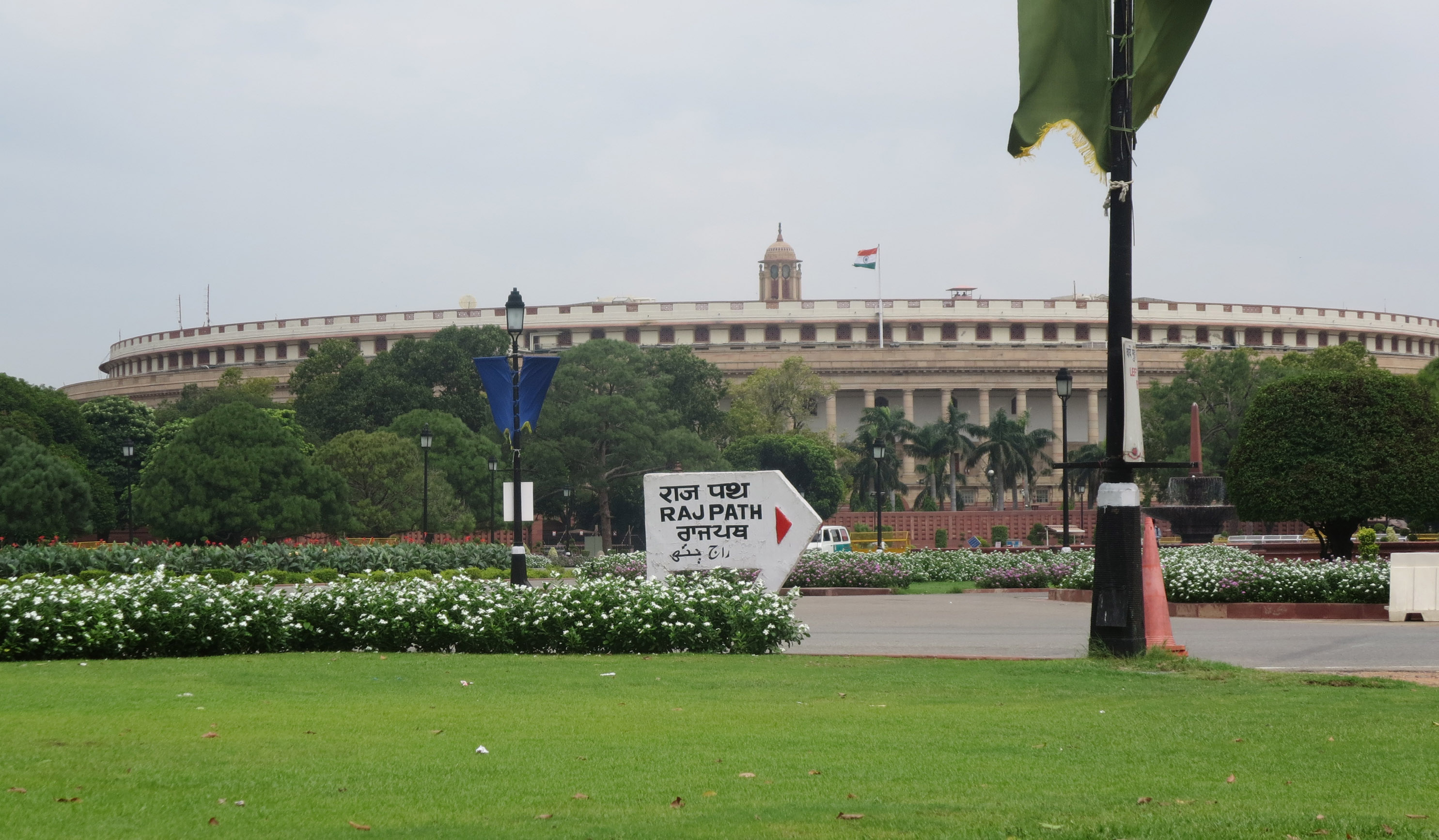
Parliament's Monsoon session has remained unprorogued for 88 days since both Houses were adjourned indefinitely on August 13, breaking the previous record of 87 days set in 2008. As of Monday morning, neither the Lok Sabha nor the Rajya Sabha had been formally prorogued, keeping open the possibility of convening an extended sitting of the existing session at short notice.

The milestone is more than a statistical curiosity. By leaving the session formally open, the government has preserved the option of recalling Parliament quickly to take up legislative business, and speculation in New Delhi has centred on one item in particular: a proposed constitutional amendment linked to the implementation of the Women's Reservation Bill.
The continued life of the Monsoon session means the government could bring Parliament back within days rather than weeks, a flexibility that would disappear the moment the session is prorogued and a fresh session has to be summoned.
Under the Constitution, a session of Parliament ends in one of two ways. When the presiding officers adjourn the Houses sine die, the sitting ends but the session itself remains alive until the President formally prorogues it on the advice of the government. There is no constitutional time limit for prorogation after an adjournment sine die, which is why the government is under no legal obligation to close the session by any particular date.
Once prorogued, a new session can only be convened after a fresh summons, a process that takes considerably longer.
The practical difference matters. An extended or special sitting of Parliament within the same session requires a minimum notice of two days, whereas convening a fresh session requires at least 14 days' notice. By keeping the Monsoon session unprorogued for 88 days, the government has retained the ability to reconvene the Lok Sabha and the Rajya Sabha at 48 hours' notice, a window that could prove decisive if a constitutional amendment has to be taken up quickly.
The historical record shows how unusual the present situation is. Parliament had previously remained unprorogued for 87 days in 2008, a record that stood for 18 years until this week. Other extended intervals included 76 days in 1987, 54 days in 1989, 49 days each in 2006 and 2013, and 41 days in 1963. The current 88-day stretch has now surpassed them all, and it will lengthen further with each day that passes without a prorogation order.
The 2008 precedent is instructive. In that year, the Lok Sabha met for two days, on July 21 and 22, to discuss a no-confidence motion against the then UPA government. The House had been adjourned sine die, but because the session had not been prorogued, it could be reconvened to take up the motion at short notice.
The episode demonstrated exactly why governments sometimes prefer to leave a session open: it preserves the option of returning to the House without the delay of summoning a new session. The present government appears to be keeping the same option in reserve.
The speculation now focuses on the Women's Reservation Bill, the law that reserves one-third of seats in the Lok Sabha and state assemblies for women. The bill was passed by Parliament in 2023, but its implementation is linked to the delimitation exercise that follows the next Census.
Reports have suggested that the government may be considering a constitutional amendment connected to the implementation of the law, and one proposal under discussion would increase the strength of the Lok Sabha from the existing 543 seats to a maximum of 850 through delimitation.
If such an amendment is to be moved, it would require the support of a special majority in both Houses, and the timing of its introduction would be politically sensitive. A reconvened sitting of the existing Monsoon session would allow the government to move quickly once a decision is taken, without the two-week lead time that a fresh session would require.
The government has not confirmed any such plan, and the speculation remains just that, but the continued life of the session is the clearest available signal that the option is being kept open.
The delay in prorogation has also drawn attention to the way parliamentary sessions are managed. In normal practice, a session is prorogued within a few days of its adjournment sine die, clearing the way for the next session to be planned and summoned.
Long gaps between adjournment and prorogation have historically been associated with moments of political uncertainty or pending legislative business, when the government wants to retain the ability to bring Parliament back without delay. The current gap, now the longest on record, fits that pattern.
It is worth noting that the Monsoon session itself was a stormy one. The session, which began in July, saw repeated disruptions and adjournments, and it ended on August 13 with both Houses adjourned sine die. At the time, few observers expected the session to remain technically alive into November.
The fact that it has done so has fuelled the belief in political circles that the government is holding something in reserve, whether a constitutional amendment or some other piece of business that requires Parliament to be available at short notice.
The constitutional position is straightforward. The Constitution does not prescribe any specific time frame within which a House must be prorogued after being adjourned sine die. The decision rests with the government, which advises the President to issue the prorogation order.
There is no rule that a session must be closed within a particular period, and no parliamentary convention that has been breached by the delay. The record is therefore a matter of political significance rather than constitutional impropriety.
Nevertheless, the length of the gap invites questions. Opposition parties have in the past criticised governments for leaving sessions unprorogued, arguing that the practice reduces Parliament's role to a body that can be summoned or sidelined at the executive's convenience. Supporters of the practice argue that it is a legitimate tool of parliamentary management, allowing the government to respond quickly to developments without the delay of a fresh summons.
Both arguments have been made before, and both are likely to be made again as the record stretches further.
For the moment, the practical consequence is clear. As long as the Monsoon session remains unprorogued, Parliament can be reconvened at two days' notice to take up whatever business the government chooses to bring before it. The Women's Reservation Bill amendment is the most widely discussed possibility, but any other legislative item could equally be taken up in an extended sitting.
The government has given no indication of when it intends to prorogue the session, and the record will continue to grow until it does.
The 88-day mark is therefore both a record and a signal. It is a record because no previous session has remained unprorogued for this long, and it is a signal because the government's decision to leave the session open suggests that it expects to need Parliament again soon. Whether that expectation is fulfilled, and what business is brought before the Houses when they return, will be watched closely in the weeks ahead.
Until the prorogation order is issued, the Monsoon session of 2026 remains, in the formal sense, still in being.
(Reporting based on The Hindu and The New Indian Express.)