



The teaser of Prabhas's upcoming film Fauzi, released on the actor's birthday on October 23, has run into a storm of criticism online, with many viewers objecting to the way it portrays Netaji Subhas Chandra Bose alongside Adolf Hitler during World War II.

The two-minute-and-thirty-one-second teaser introduces Prabhas as a soldier from Kolkata who, in the film's telling, will go to any length to protect his motherland against British rule. It opens with a meeting between Bose and the German dictator, a meeting that did take place in history, but adds a fictional layer that has become the focus of the backlash.
In the teaser, Bose is shown praising Prabhas's unnamed character — an Indian spy fighting the British — while speaking to Hitler, describing his achievements and even suggesting that the spy's code machine, inspired by the Bhagavad Gita, is superior to the Nazis' Enigma machine.
The sequence ends with Hitler eager to meet the spy, before the teaser cuts to Prabhas wielding a heavy machine gun, presented in voiceover as a fearless fighter determined to challenge British rule and help secure India's freedom. The film describes its hero as India's biggest rebel soldier, and the teaser is filled with gunfights and high-energy action sequences.
While many of Prabhas's fans welcomed the action-packed introduction, a large section of viewers questioned the decision to use a revered freedom fighter to build up a fictional hero. One widely shared comment asked what the point was of including an AI-generated depiction of Bose meeting the Nazis for a film promotion.
Another demanded that a criminal case be filed against the makers for exploiting Bose to elevate and glorify the lead character, and called for an immediate public apology and removal of the video.
The sharpest criticism has centred on the idea of Bose as a cheerleader for the protagonist. One viewer wrote that it was an insult to Bose's efforts and sacrifices for the country to portray him in a role that exists largely to praise the hero, while another said the makers had made a mockery of both Hitler and Netaji.
A Reddit user wrote that using a real historic figure and national hero to hype up a fictional hero was sad and infuriating, and said they would skip the film as a result.
Others questioned the plausibility of the scene itself, asking how military leaders would discuss a spy in such a manner, and criticised the portrayal of Hitler, whose appearance some viewers described as unconvincing. Some also compared the teaser's approach to recent action films, arguing that it leaned too heavily on a familiar template of a blood-soaked lead character operating a heavy machine gun against a loud background score.
Not everyone agreed with the criticism. Loyal fans of Prabhas defended the film, arguing that it is a fictionalised story inspired by a real character, and that creative licence allows filmmakers to imagine encounters that never happened. Others simply expressed excitement for the project, praising the scale of the action and the star's screen presence.
The debate touches on a sensitive question in Indian cinema: how filmmakers should handle real historical figures, particularly freedom fighters who command deep public reverence. Bose, who led the Indian National Army and sought international support for India's independence during the Second World War, remains one of the most emotive figures in the country's freedom movement.
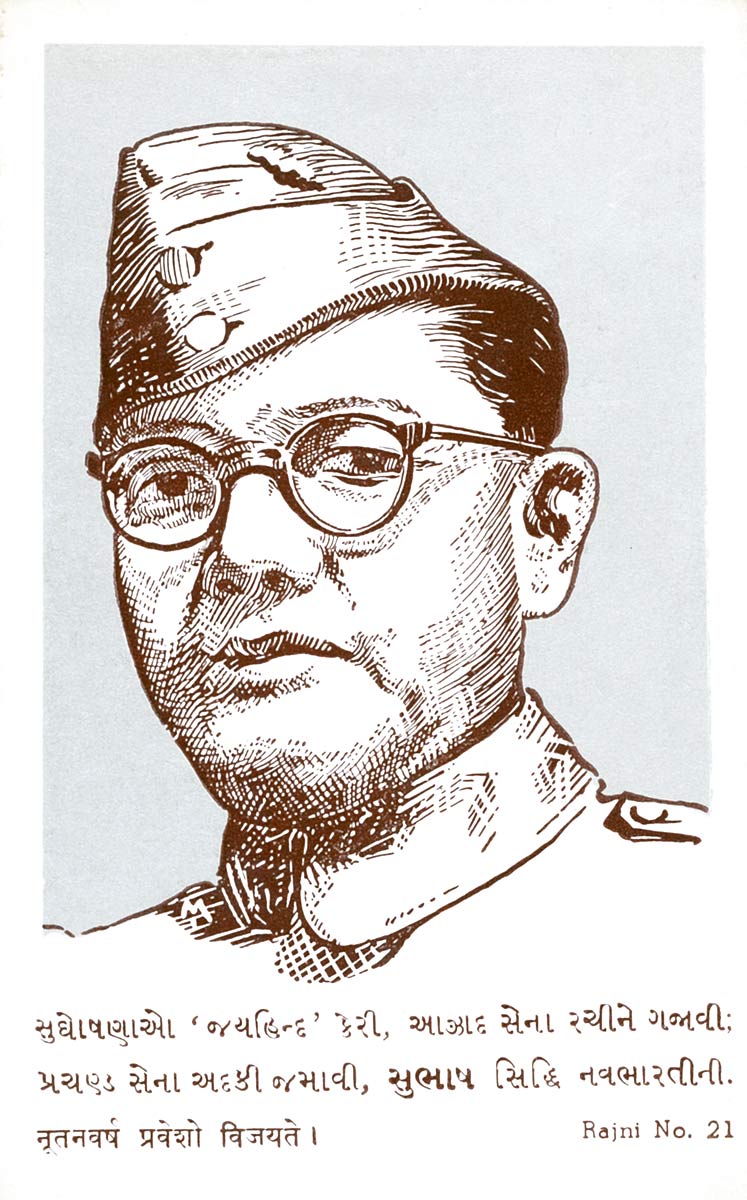
His 1941 meeting with Hitler in Berlin is a matter of historical record, but historians note that the encounter was a diplomatic one in pursuit of support for Indian independence, not an endorsement of Nazi ideology.
Filmmakers have long wrestled with the balance between dramatic storytelling and historical responsibility. Supporters of creative freedom argue that cinema is not a history textbook, and that fictionalised retellings can introduce younger audiences to figures they might otherwise never encounter.
Critics counter that when a beloved national hero is reduced to a supporting role whose main function is to praise a fictional character, the portrayal risks distorting public understanding of that person's real contribution.
The use of AI-generated visuals in the teaser has added another layer to the discussion. Several viewers specifically objected to an AI-generated depiction of Bose, arguing that recreating a real person digitally for a commercial film raises ethical questions, particularly when the recreated figure is shown in invented conversations. The makers have not publicly responded to the criticism so far.
The controversy also reflects the power of social media to shape a film's reception before release. Teasers and trailers are now dissected within hours by millions of viewers, and a single scene can dominate conversation for days. For Fauzi, the Bose-Hitler sequence has overshadowed the action elements that the makers presumably intended to highlight, turning the teaser's launch into a debate about respect, history and creative licence.
Whether the backlash affects the film's prospects remains to be seen. Prabhas remains one of Indian cinema's biggest stars, with a fan base that has repeatedly powered his films to strong openings despite mixed reviews. But the intensity of the reaction suggests that the makers may face sustained questions about the portrayal as the film's release approaches, and about whether any changes will be made.
The timing of the teaser's release, on Prabhas's birthday, is itself part of the film's marketing strategy. Birthday releases have become a tradition for major stars, giving fans a celebratory moment to rally around and giving the film's first look maximum visibility on social media. In this case, however, the celebratory mood was quickly overtaken by debate, as the historical sequence drew more attention than the action footage.
Historical context helps explain why the reaction has been so strong. Bose remains a uniquely emotive figure in India, remembered for his call to arms, his leadership of the Indian National Army, and his efforts to win international backing for independence at a time when the mainstream freedom movement was committed to non-violent resistance.
His slogan calling on Indians to give him blood in exchange for freedom is still quoted today, and his legacy is guarded jealously by admirers across political lines. Any depiction of him, particularly one generated with artificial intelligence, is therefore likely to be scrutinised closely.
For now, the teaser continues to circulate widely, and the argument it sparked shows no sign of fading. At its heart is a question that goes beyond one film: how should popular cinema honour the figures who shaped a nation's history, without turning them into props for fiction?
(Reporting based on NDTV and The Times of India.)