





Three major works of India's heritage, Kalhana's Rajatarangini, the Mahabharata and Kautilya's Arthashastra, have been added to UNESCO's Memory of the World Regional Register for Asia and the Pacific, in a recognition that places three of the subcontinent's most important texts among the documentary heritage of the region. The decision was taken at the 11th session of the Memory of the World Committee for Asia and the Pacific, known as MOWCAP, held in Jakarta, Indonesia.

The announcement was made by Dr Sachchidanand Joshi, member secretary of the Indira Gandhi National Centre for the Arts, which contributed to preparing the nomination dossiers for all three works.
The recognition is the latest step in a process that has been building over several years. In 2024, India secured regional register recognition for three other works, the Ramcharitmanas, the Panchatantra and the Sahridayalokana. With the latest additions, India's total number of inscriptions in the regional register has risen to six.
The figure of six is a measure of the breadth of the heritage that has now been recognised, spanning epic narrative, historical chronicle, religious literature, storytelling, literary theory and the science of governance. The three new inscriptions and the three from 2024 together present a picture of a documentary tradition that covers many of the central concerns of Indian civilisation.
The Rajatarangini, composed in the 12th century by the Kashmiri historian Kalhana, provides a chronological account of Kashmir's rulers, political developments and the region's social and cultural life, and is regarded as one of the most important historical chronicles of medieval India and one of the subcontinent's earliest systematic works of historiography. The claim for the Rajatarangini rests on its method as much as on its subject.
It is a work that sets out to record the past in order, to give an account of kings and of the political life of a region, and to place that account within a wider understanding of the society and culture of Kashmir. Its standing as a chronicle of medieval India and as an early systematic work of historiography is the reason it is treated as a landmark in the writing of history in the subcontinent.
The Mahabharata, one of the world's longest epic narratives, traditionally attributed to the sage Vyasa, explores dharma, duty, justice, power and human relationships. Its length is part of its character, but its importance lies in the questions it raises. It is a narrative that works through the duties that bind people to one another, the claims of justice against the claims of power, and the choices that are made when those claims come into conflict.
The epic has been retold, performed, illustrated and debated for centuries, and its recognition in the regional register is a recognition of a text that has shaped the moral and literary imagination of South Asia and far beyond it.
The Arthashastra, traditionally attributed to Kautilya, also known as Chanakya, is a foundational work on governance, administration, economics, diplomacy and military strategy. It is a text that treats the state as a subject of systematic thought, setting out how a kingdom should be administered, how its economy should be managed, how it should conduct its relations with other states, and how it should prepare for and conduct war.
Its inclusion alongside a historical chronicle and an epic narrative means that the three new inscriptions cover three different kinds of writing, and three different ways in which a civilisation records its understanding of the world.
The recognition applies not to the works in the abstract but to specific manuscripts, and the details of those manuscripts are part of the announcement. The Mahabharata is represented by The Birch-bark Manuscript of Mahabharata, A Perennial Epic of South Asia, a 400-year-old birch-bark document written in the Sharada script, housed at the Bhandarkar Oriental Research Institute in Pune.
The age of the manuscript, the material on which it is written, and the script in which it is written are all part of its significance. Birch bark was a writing material of the region, Sharada was the script of Kashmir and the north-west, and the survival of a manuscript of that age in that form is a record of the way in which the epic was preserved and transmitted.
The Arthashastra is represented by Kautilya's Arthashastra, Ancient palm-leaf Manuscript on Governance and Statecraft, a 16th-century palm-leaf manuscript in Grantha script, housed at the Oriental Research Institute in Mysuru. Palm leaf was a durable and widely used writing material in southern India, and Grantha was a script used for Sanskrit texts in the south.
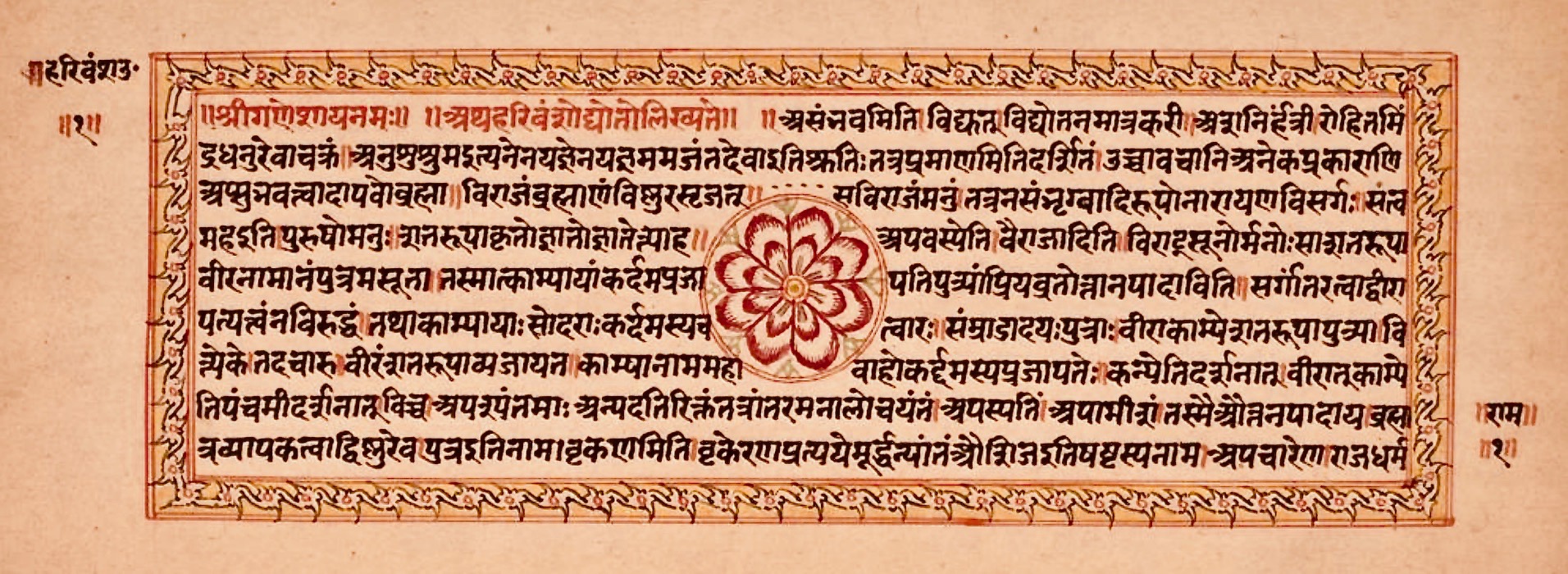
The manuscript is a physical link between the ancient text and the later tradition that copied, studied and preserved it, and its presence in Mysuru is a reminder that the Arthashastra was not confined to one region but was carried across the subcontinent in different scripts and on different materials.
The Rajatarangini is represented by The Manuscript of Rajatarangini by Kalhana, A Twelfth-century Chronicle of Kashmir, housed at the Oriental Research Library in the Sri Pratap Singh Library Complex in Srinagar. The location is fitting, since the work is a chronicle of Kashmir, and its housing in Srinagar places the manuscript in the region whose history it records.
The three manuscripts, taken together, are held in Pune, Mysuru and Srinagar, in institutions that are themselves part of the long history of scholarship and preservation in India.
Union Minister for Culture and Tourism Gajendra Singh Shekhawat welcomed the announcement, calling it a moment of immense pride and a landmark recognition of India's extraordinary documentary and civilisational heritage.
His words place the recognition in a national frame, presenting it as a matter of pride for the country as a whole and as an acknowledgement of a heritage that is both documentary, in the form of the manuscripts themselves, and civilisational, in the ideas and histories that they carry.
Gujarat Chief Minister Bhupendra Patel also called the recognition a matter of pride for every Indian, echoing the sense that the honour belongs not to a single institution or region but to the country.
The framework within which the recognition has been given has its own history. UNESCO's Memory of the World Programme was launched in 1992 to protect documentary heritage against loss, deterioration and collective amnesia. The programme was created in the recognition that documents, manuscripts, archives and other records are vulnerable, that they can be lost through neglect, damage or destruction, and that their loss is a loss of memory for a society as a whole.
The Asia-Pacific Regional Register is administered through the Memory of the World Committee for Asia and the Pacific, and it is the regional register to which the three works have now been added.
India's participation in the programme is coordinated by the Indira Gandhi National Centre for the Arts, designated the nodal institution in 2014. The centre's role in preparing the nomination dossiers for all three works is part of that coordination, and the announcement by its member secretary, Dr Sachchidanand Joshi, reflects the institution's central place in the process.
The designation of a nodal institution in 2014 gave India a single point of coordination for its engagement with the programme, and the inscriptions of 2024 and of the present year are the results of that sustained engagement.
The announcement comes amid efforts under the Gyan Bharatam Mission to preserve, promote and digitise India's manuscript heritage. The mission's aims, preservation, promotion and digitisation, are directly relevant to manuscripts such as the three that have been inscribed. Preservation addresses the physical survival of fragile materials such as birch bark and palm leaf.
Promotion addresses the wider knowledge of the works and their importance. Digitisation addresses the question of access, making it possible for scholars and readers to consult manuscripts that would otherwise be available only in a single library. The recognition by UNESCO and the work of the mission are, on that account, parts of a single effort to ensure that the heritage survives and is known.
(Reporting based on The Times of India and NDTV.)