







Congress Parliamentary Party chairperson Sonia Gandhi has said that her upcoming memoir is not a political book but a personal one, and that she wanted to portray her family honestly, as people she knew and loved.

Writing in The Hindu ahead of the release of her book, Belonging: A Journey of Love, Gandhi said the memoir was her account of the place she came to call home, and of the journey that brought her there.
"This is not a political book. It is a personal one. Much has been written about my family, but rarely with real insight into who they were, their motivations, their struggles, their very human flaws. I wanted to portray them honestly, as people I knew and loved," she wrote.
The 544-page memoir, published by HarperCollins India, is scheduled for release in India on November 10, 2026, the same day as its global release. The Indian publication ends uncertainty over the book's domestic release, which had followed an impasse between the author's representatives and Penguin Random House India.
Gandhi also shared her remarks on X, the social media platform, two days before the India release, describing the book as her account of a journey and of the place she came to call home.
The memoir covers some of the most painful episodes in the Gandhi family's history, including the tragedies that shaped the family and the country. Among them are the death of Sanjay Gandhi in a plane crash, the assassination of Indira Gandhi in 1984 and the assassination of Rajiv Gandhi in 1991.
Sanjay Gandhi, the younger son of Indira Gandhi and the brother-in-law of Sonia Gandhi, died in a plane crash in 1980. Indira Gandhi, who was prime minister at the time, was assassinated by her own bodyguards in 1984. Rajiv Gandhi, who succeeded his mother as prime minister and was Sonia Gandhi's husband, was assassinated by a suicide bomber in 1991.
The book also deals with the political events surrounding the Congress-led alliance's victory in the 2004 general elections, when Sonia Gandhi declined to become prime minister and instead led the party and its alliance, which governed India for a decade until 2014.
That decision, which surprised many observers at the time, remains one of the most discussed moments in recent Indian politics. Gandhi's account of it in the memoir is expected to be closely read, both by her supporters and by her critics.
The memoir has already attracted political attention. The Bharatiya Janata Party has questioned the purpose of the book, saying that it contains political rhetoric rather than pure personal reflection. The criticism intensified after the interview Gandhi gave to The Hindu ahead of the memoir's release.
The controversy around the book reflects the unusual position Sonia Gandhi occupies in Indian public life. She was born in Italy and came to India after her marriage to Rajiv Gandhi, eventually becoming one of the most powerful figures in the Congress party. She led the party for nearly two decades and played a central role in its return to power in 2004.
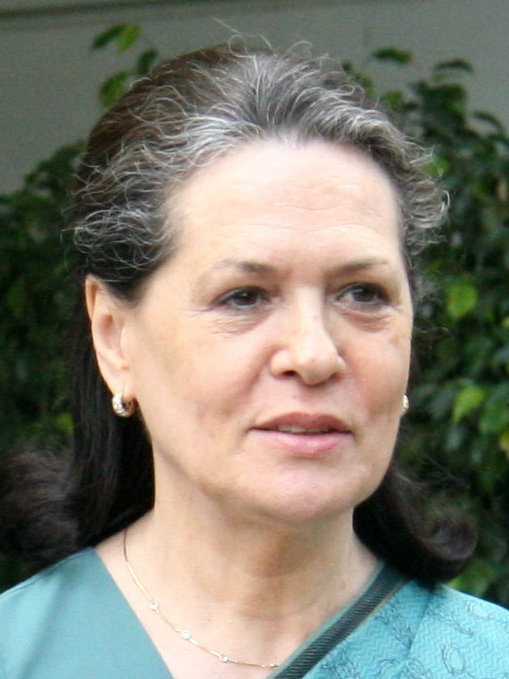
Her memoir is therefore not only a personal account but also a document that touches on some of the most consequential decades in modern Indian history. The book's title, Belonging: A Journey of Love, suggests that its central theme is the author's relationship with India itself, a country she arrived in as an outsider and came to regard as home.
Gandhi's insistence that the book is personal rather than political is itself a statement. She has argued that much has been written about her family, but rarely with real insight into who its members were as people. The memoir, she says, is an attempt to correct that, by presenting the family as she knew it, with its motivations, its struggles and its human flaws.
The book's publication has been awaited for some time. Reports of a memoir by Sonia Gandhi have circulated for years, and the announcement of its release generated considerable interest in political and literary circles. The 544-page volume is one of the most substantial memoirs by an Indian political leader in recent years.
HarperCollins India will publish the Indian edition on November 10, resolving the earlier impasse with Penguin Random House India. The global release on the same day means that the book will be available in several countries simultaneously.
The timing of the release, two days after Gandhi's article in The Hindu, was designed to build anticipation for the book. The article, in which she explained why she had written the memoir, was published on Saturday, and her comments on X followed on Sunday.
The memoir's treatment of the 2004 elections is likely to draw particular attention. In that year, the Congress-led United Progressive Alliance won a surprise victory over the Bharatiya Janata Party-led National Democratic Alliance. Sonia Gandhi, as Congress president, was widely expected to become prime minister, but she declined the post and instead nominated Manmohan Singh, who served as prime minister for two terms.
Gandhi's decision was praised by her supporters as an act of selflessness and criticised by her opponents as a political calculation. Her own account of the episode, in her own words, is one of the most eagerly awaited passages in the book.
The memoir also covers the family's tragedies in detail. The deaths of Sanjay Gandhi, Indira Gandhi and Rajiv Gandhi within little more than a decade transformed the family's fortunes and shaped Sonia Gandhi's own life. Her account of those years, written from the inside, is expected to offer a perspective that no other writer could provide.
The book's publication comes at a time when the Congress party is seeking to rebuild its position in Indian politics. Gandhi, who remains the chairperson of the Congress Parliamentary Party, continues to be a central figure in the party, even as a new generation of leaders takes on a larger role.
Whether the memoir is read as a personal story or as a political document, it is certain to be one of the most discussed books of the year. Gandhi herself has made clear how she wants it to be read: not as a political statement, but as a personal story about a family, a journey and a home.
(Reporting based on NDTV and The Times of India.)