

New Delhi: The Supreme Court has permitted the manufacture, sale and bursting of certified green firecrackers in Delhi-NCR for a short, strictly regulated window around Diwali, while making it clear that the complete ban on firecrackers will return with full force from November 9, 2026.

The order, passed by a bench of Justices M. M. Sundresh and Prasanna B. Varale on October 29 and made public on Monday, November 2, lays down precise hours, places and product conditions under which celebrations may take place this year.
Under the court's directions, certified green crackers may be burst only between 6 am and 7 am and again between 8 pm and 10 pm on November 7 and November 8. Diwali falls on November 8 this year.
The sale of approved green crackers has been allowed from November 4 to November 6, and manufacturers holding the required certifications may produce only those products that have been uploaded on the website of the Council of Scientific and Industrial Research–National Environmental Engineering Research Institute, or CSIR-NEERI, between November 2 and November 6.
The permission is narrow by design. Only crackers certified by CSIR-NEERI and manufactured by units holding valid licences from the Petroleum and Explosives Safety Organisation, known as PESO, are covered. Firecrackers joined in series, commonly called ladis, and garlands of crackers are prohibited altogether.
Crackers containing barium, and any product not approved by CSIR-NEERI as a green cracker, remain banned. Only firecrackers carrying product-specific QR codes will be allowed to be sold, a measure intended to make it harder for conventional crackers to be passed off as green ones.
The court has also drawn a firm line around sensitive locations. There shall be no bursting of fireworks within a 300-metre radius of hospitals, nursing homes, primary and district health centres, old-age homes and educational institutions, as well as notified silence zones. These areas are to be declared as no-cracker zones, marked on the ground and published, so that residents and enforcement teams know exactly where the prohibition applies.
The restriction reflects the court's concern for those most exposed to smoke and noise, including children, the elderly and people with disabilities.
Monitoring has been built into the order. The Central Pollution Control Board, working with the state pollution control boards, has been directed to prepare daily air-quality reports for three periods: November 2 to 6, before Diwali; November 7 and 8, the days of permitted bursting; and November 9 to 30, the period after the ban returns.
Authorities must file compliance affidavits by December 14, covering enforcement measures, designated sale locations, prosecutions launched, trends in the air quality index and hospital admissions recorded after Diwali. The matter will be heard next on December 16, when the court will be able to test whether the regulated window worked in practice.
The bench explained why it chose regulation over a blanket ban for these two days. In its reasoning, the court noted that an earlier total prohibition had neither improved air quality significantly nor stopped the illegal sale and use of conventional firecrackers. A regulated approach, the judges concluded, stood a better chance of being followed, because it gave residents a lawful route to celebrate while keeping enforcement focused on genuinely harmful products.
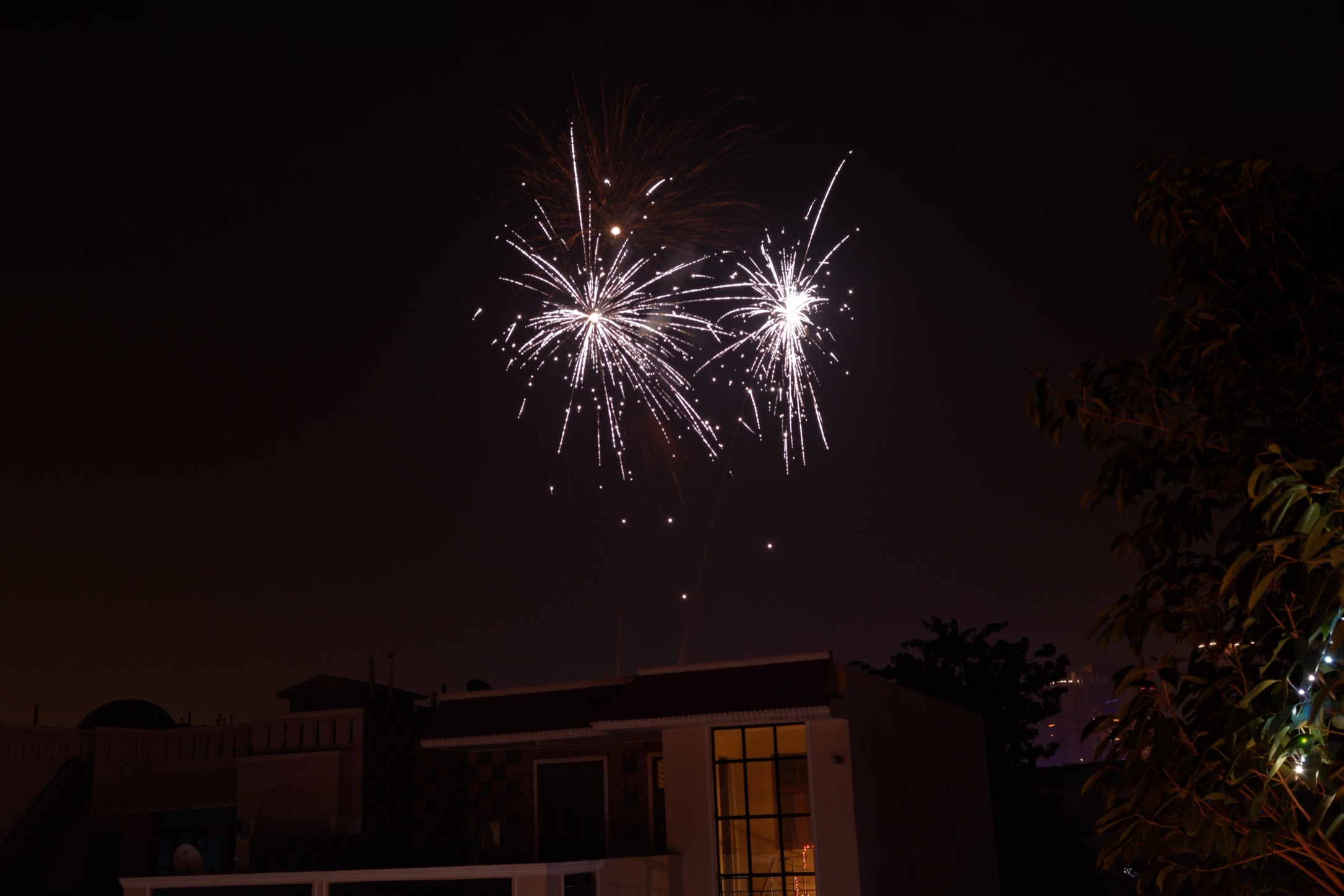
At the same time, the court did not soften its view of the harm involved. Bursting firecrackers, it observed, constitutes a religious practice meant to celebrate the occasion, but if left unregulated it takes a heavy toll on the environment and on public health, producing severe air and noise pollution along with solid waste.
That balance between celebration and public health has shaped this litigation for years. In the 2018 case of Arjun Gopal versus Union of India, the Supreme Court, weighing concerns about air pollution against the religious significance of Diwali, permitted the manufacture and sale of crackers with reduced emissions, described as improved crackers, and green crackers.
The court revisited the question in an order dated October 15, 2025, and again allowed the sale and bursting of green firecrackers for three days, from October 18 to 20, 2025, as a temporary measure. The present order follows that pattern, treating the relaxation as an exception with a fixed expiry rather than a permanent change in the law.
The court has also pressed for a change in public attitudes. In its October 29 order, it called on members of the Bar, celebrities, sportspersons and other prominent personalities to voluntarily lead awareness campaigns, urging citizens to embrace environmentally responsible celebrations rather than waiting for pollution to peak before acting.
The bench stressed the precautionary principle, the idea that preventive steps should be taken before harm occurs, and said lasting change requires people to adopt cleaner celebrations as a matter of habit, not merely obey a temporary set of rules.
For traders, the order brings short-term relief with strict limits. Licences of firecracker traders that had been cancelled have been restored temporarily, from November 4 to November 6, solely to enable the sale of approved green crackers purchased from CSIR-NEERI-certified manufacturers. Once that window closes, the restoration lapses, and the complete ban returns on November 9.
Any trader selling conventional crackers, barium crackers or unapproved products during the window risks prosecution, and the compliance affidavits due in December will require authorities to account for the action they took.
The timing matters for Delhi-NCR, where air quality typically deteriorates sharply in late October and November as farm fires, vehicle emissions, dust and winter weather combine to trap pollutants close to the ground. The morning of the court's announcement, Delhi's air quality index stood at 312, in the very poor category, a reminder of how little room the region has for additional smoke.
The court's insistence on daily air-quality reporting through November 30 is meant to capture not only the immediate effect of Diwali bursting but also the longer tail of pollution that follows the festival.
Residents planning to celebrate should therefore note the essentials: only certified green crackers, bought from authorised sellers between November 4 and 6, may be burst, and only during the permitted morning and evening hours on November 7 and 8. Bursting is barred near hospitals, health centres, old-age homes, schools and silence zones. Joined-series crackers, barium crackers and any product without CSIR-NEERI approval are out.
And from November 9, the complete ban is back, with the court watching through its December hearing to see whether the experiment in regulated celebration delivered cleaner air than the blanket bans of the past.
(Reporting based on The Hindu, The Indian Express, The Statesman and Deccan Herald.)