







India captain Shubman Gill has laid out his team's batting plan for the five-match one-day international series against New Zealand, confirming that the top four positions are settled while the middle order will stay flexible and respond to the situation in each match.

Speaking at the pre-match press conference in Auckland on Tuesday, a day before the series opener at Eden Park, Gill said India would adopt what he called a floating approach for the numbers five and six. The top four, he stressed, will not change: himself, Rohit Sharma, Virat Kohli and Shreyas Iyer, all right-handed batters, will occupy the first four slots.
"We will have floating approach for no. 5 and no. 6. Our top four is set, all right-handers. So if lefty is needed, Axar bhai goes and depending on match situation even KL bhai can go. So bit flexible," Gill said, using the affectionate "bhai" for his team-mates Axar Patel and KL Rahul.
The logic is straightforward. With four right-handers at the top, India want the option of sending in a left-hander when the match situation demands it, whether to break up a spell of bowling, to target a particular bowler, or to change the rhythm of an innings. Axar Patel, the left-arm spinning all-rounder, provides that left-handed option, while KL Rahul, one of the most experienced batters in the squad, can be moved up or down the order as the team requires.
Gill made it clear that neither player has a fixed slot, and that the choice between them will be made on the day, after reading the pitch, the opposition attack and the state of the game.
The series begins on Wednesday, November 4, with the first ODI at Eden Park in Auckland, scheduled for the morning in Indian time. It is a five-match contest, and it carries added significance because Gill will lead India only for the first three matches. He will then be released from the squad to prepare for the two-Test series later this month, with vice-captain Shreyas Iyer taking over the captaincy for the final two ODIs in Mount Maunganui.
The remaining matches of the tour take in Wellington and Hamilton as well, giving India a full tour of New Zealand's major venues.
Gill also spoke about Hardik Pandya's return, saying that once the all-rounder is back, the lower middle order will look after itself. "Whenever Hardik bhai comes back, no. 7 and 8 will also be taken care of. Happy with batting group leading up to the World Cup," he said, referring to the build-up to the next ODI World Cup.
The remark underlines how central Pandya's all-round ability is to India's balance: a genuine fast-bowling all-rounder at seven or eight lengthens the batting while keeping five bowling options intact.
The captain also addressed concerns about his own fitness, dismissing worries about his neck. Gill suffered a cervical disc bulge and a neck spasm that affected his nerves in late 2025, an injury that kept him out of international cricket for nearly a month. He said he had recovered and was comfortable, a reassurance that will matter to supporters given how much of India's batting revolves around his form at the top of the order.
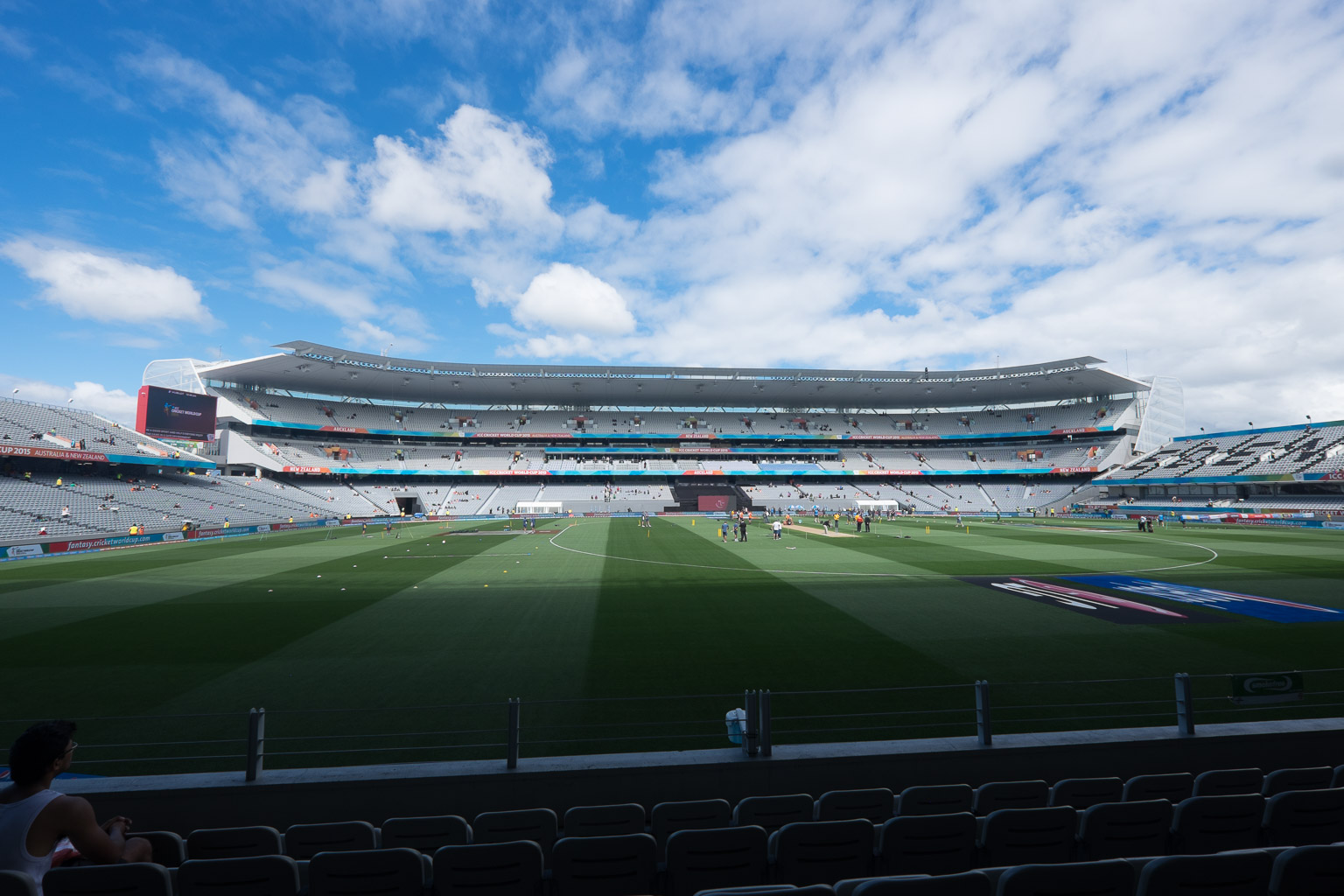
There is one statistical shadow hanging over Gill as the series begins. New Zealand has not been a favourable venue for him in ODI cricket so far: he has managed only 124 runs in five appearances on New Zealand soil. Auckland, where the series opens, therefore offers him an immediate chance to correct that record, and to set the tone for a series in which India will be expected to dominate with the bat.
The broader context is India's search for the right combination ahead of the World Cup cycle. The top four picks itself on current form and reputation: Rohit Sharma's experience and power at the top, Kohli's record in chases and big matches, Iyer's composure in the middle, and Gill's own elegance and consistency as captain and opener. The question has always been what happens after them, and Gill's answer is deliberately undogmatic.
Rather than fixing Rahul at five and Axar at six, or the other way round, he wants the freedom to react, a philosophy that modern ODI cricket increasingly rewards, where match-ups and phases of play matter as much as reputations.
Axar's case for a floating role is strong. As a left-hander who also bowls left-arm spin, he gives the team balance in both disciplines, and he has grown into a reliable finisher in white-ball cricket. Rahul's case is different but equally compelling: a batter who has kept wicket, opened, and finished innings, he is the squad's most versatile player, and his ability to adapt to a role on the day is precisely what a floating policy needs.
New Zealand, meanwhile, will pose a searching examination. Their seamers exploit swing and seam movement at home, and Eden Park's short boundaries can turn a good total into a modest one if the bowling is not disciplined. India's batters will need to be watchful early and expansive later, and the flexibility Gill described may prove most valuable in the middle overs, when the field spreads and the spinners come on.
The series also matters for the players beyond the top four. With Gill leaving after three matches, Iyer's brief captaincy stint in the final two games will be watched closely, and the performances of the floating five and six will shape selection debates for months. A strong series from either Axar or Rahul in that role could settle the argument; a failure could reopen it.
There is also a tactical reason for keeping the middle order fluid. In New Zealand, where the ball can swing early and the grounds vary sharply in size, a captain who can send in a left-hander to disrupt a bowler's line, or a seasoned finisher to close out an innings, gains a small but real edge.
Eden Park, with its short straight boundaries, rewards batters who can find gaps and clear the infield, while the larger grounds later in the tour will test placement and running between the wickets. A fixed order cannot adapt to both; a floating one, in Gill's view, can.
For now, though, Gill's message is one of calm clarity. The top is set, the middle will float, and the team is happy with where its batting group stands. If that clarity translates into runs in Auckland, the rest of the series may take care of itself.
(Reporting based on The Times of India and NDTV Sports.)