







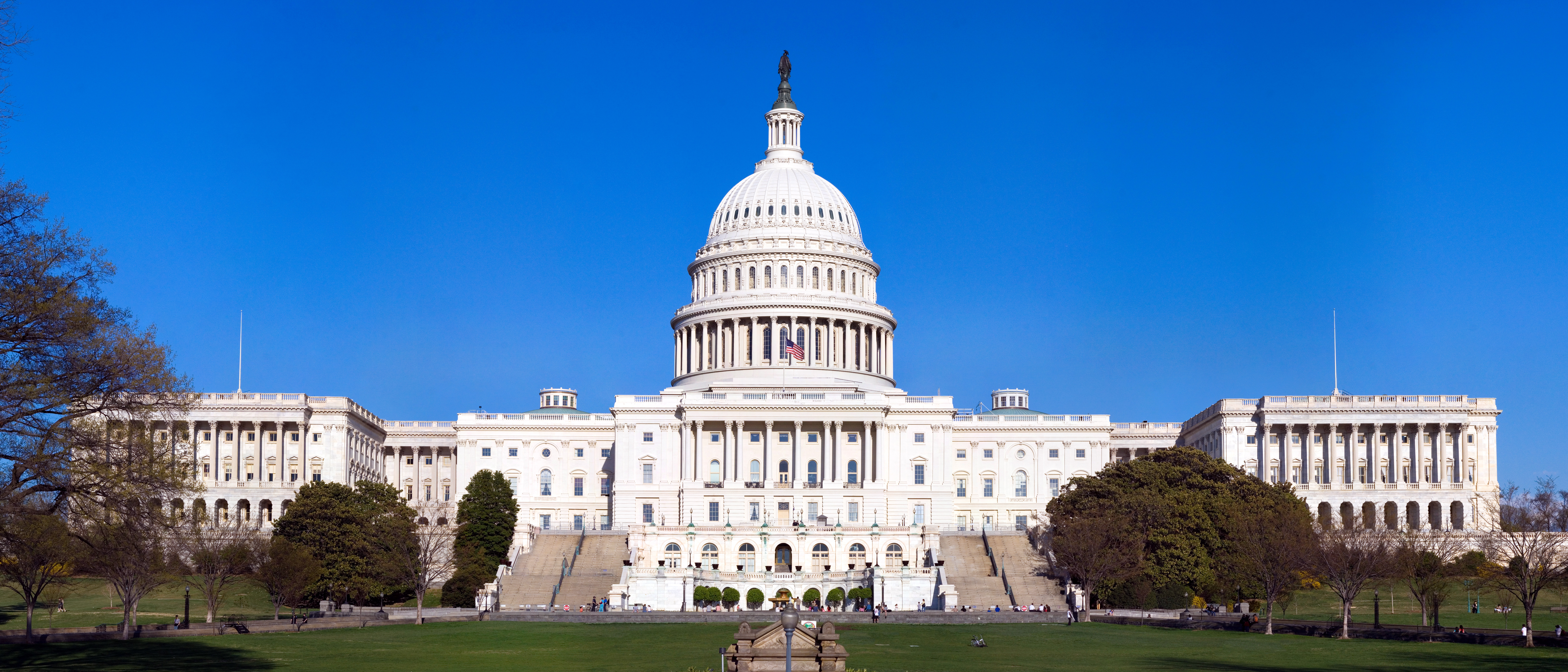
American voters have delivered a sharp rebuke to President Donald Trump in the midterm elections, handing control of both chambers of Congress to the opposition Democratic Party. For India, which has spent months negotiating a trade agreement with Washington while watching its professionals, exporters and energy buyers caught in the crossfire of American domestic politics, the result does not settle anything overnight.

It changes the balance of power in Washington, increases scrutiny of the president's policies, and leaves several of New Delhi's most sensitive questions — tariffs, Russian oil, and visas for skilled workers — in a more complicated, but potentially more negotiable, place.
The scale of the Democratic victory is the starting point. According to reports of the results, Democrats won control of both the House of Representatives and the Senate on Tuesday, flipping at least seven Senate seats and more than two dozen House districts. They also won closely watched governors' races in states including Texas, Georgia and Iowa, which had been Republican strongholds.
For Trump, who is now facing an opposition-controlled Congress for the final two years of his presidency, the defeat limits his ability to push legislation through Congress without Democratic support. It does not, however, remove his executive powers, and that distinction matters for almost every issue that concerns India.
Trade is likely to be the most immediate area of friction. Trump's tariff policy has disrupted negotiations and created deep uncertainty for Indian exporters across textiles, engineering goods, pharmaceuticals, chemicals and agriculture. Earlier this year, the administration's tariff moves pushed duties on some Indian products to as much as 50 per cent, after an additional 25 per cent levy linked to India's purchases of Russian oil was added to existing reciprocal tariffs.
Indian exporters, many of them small and medium enterprises, have had to absorb higher costs, renegotiate contracts and, in some cases, lose orders to competitors in countries facing lower duties.
In February 2026, India and the United States announced a framework for an interim agreement on reciprocal trade, while continuing negotiations for a broader bilateral trade agreement. The framework proposed an 18 per cent American reciprocal tariff rate on specified Indian goods, alongside Indian tariff reductions on American industrial and agricultural products.
That framework has not yet become a final deal, and the midterm result could strengthen New Delhi's case for a cautious, wait-and-watch approach. With Democrats now able to increase oversight of the president's trade actions and restrict his ability to impose reciprocal tariffs unilaterally through Congress, Indian negotiators may feel they have more room to hold out for better terms rather than rushing into concessions.
Business Standard, reporting on the reaction in New Delhi, said Indian officials were cautious about the results, saying the outcome eases some of the pressure over trade tensions but creates a new layer of uncertainty in an already fragile relationship. That caution is well founded. Trump still retains significant leverage.
In September, he signed into law a Russia oil sanctions bill that gives him the ability to impose levies of as much as 100 per cent on the top buyers of Russian energy. There is also the threat of tariffs from ongoing American trade investigations, which do not depend on congressional approval in the same way. The election result, in other words, means more oversight and more political resistance to new tariffs, but not the end of tariff pressure.
The Russian oil question illustrates that complexity. Earlier this year, the Trump administration secured support for the Lindsey Graham Sanctioning Russia and Iran Act of 2026, which allows the president to impose tariffs of up to 100 per cent on countries importing oil from Russia and Iran in a big way. India and China lead the list of Russian oil buyers.
Recently, Trump announced a waiver on those tariffs for India, but the waiver was only for a period of 60 days. The Republican loss in Congress is unlikely, on its own, to change the administration's stance on buyers of Russian crude, analysts quoted in the coverage noted.
What may work in India's favour for now is America's own interest in keeping oil prices in check, including its diesel dealings with Russia, and the need for both the Trump administration and Democrats to avoid measures that would push up prices for American consumers.
For now, India continues to enjoy relief from the prospect of 100 per cent tariffs for its crude purchases from Russia, but that relief may itself be used as a pressure tactic by Washington to finalise a trade deal.
For Indian professionals hoping to work in the United States, the midterm result offers even less immediate comfort. The Trump administration has tightened access to H-1B visas through a 100,000-dollar fee on new petitions and a wage-weighted selection system, making it harder for Indian professionals to secure American jobs. It has also suspended eight technology companies from the PERM green card programme, disrupting some workers' routes to permanent residency.
Indians accounted for 71 per cent of new H-1B visa petitions in fiscal year 2024, according to United States Citizenship and Immigration Services data cited in a Carnegie survey report, which underlines how heavily the system affects India. A February 2026 survey by Carnegie found that 66 per cent of Indian American respondents opposed the 100,000-dollar fee, while 23 per cent supported it.
Will the midterm results change that approach? The assessment in the coverage is blunt: not much is expected to change. Ajay Srivastava, founder of the Global Trade Research Initiative, was quoted as saying that tighter immigration policies find bipartisan support, because both Democrats and Republicans prioritise domestic employment.
Stephen Miller, the White House deputy chief of staff widely described as the architect of Trump's immigration crackdown, has pushed restrictions affecting skilled foreign workers, and his agenda has become a source of concern among Indian Americans. Democrats re-elected in the House include Indian American representatives Ami Bera, Ro Khanna, Suhas Subramanyam and Pramila Jayapal, while Pia Dandiya won Florida's 22nd Congressional District, defeating Republican Casey Askar.
Their presence may increase scrutiny of visa policy, but scrutiny is not the same as reversal, and no bipartisan coalition for loosening H-1B rules has yet emerged.
The same pattern applies to students and families. Indian students form one of the largest groups of international students in the United States, and changes in visa screening and entry rules affect them directly. Congressional scrutiny could become more important here, with committees able to question officials and demand explanations for delays and refusals.
But the executive branch retains wide discretion over visa administration, and a Democratic Congress cannot simply order a different visa policy into existence without legislation that the president would have to sign.
There is also a wider economic context that India cannot ignore. United States goods and services trade with India totalled 239.6 billion dollars in 2025, according to the Office of the United States Trade Representative, including an American goods trade deficit of 58.4 billion dollars. That scale makes the relationship too large to be treated as a side issue in American politics, but it also makes it a target whenever American politicians want to show toughness on trade.
The Rajya Sabha's Standing Committee on Commerce, in an August report on India-US trade relations, recommended concluding a bilateral trade agreement while protecting Indian interests — a reminder that New Delhi's own parliament is also watching the negotiation closely.
What, then, should India expect in the months ahead? First, more noise and more oversight in Washington, with congressional hearings and resolutions that may embarrass the administration but may not change policy. Second, a negotiating environment in which New Delhi can argue, with greater credibility, that hasty concessions are unnecessary because the American political landscape is shifting.
Third, continued executive action on tariffs and sanctions, particularly through laws already on the books and through trade investigations that do not require new legislation. And fourth, little relief on immigration, where the politics in both parties points towards restriction rather than openness.
The midterm verdict is therefore best read not as a turning point for India, but as a change in the terrain on which India must negotiate. The pressure from tariffs may ease at the margins, the threat over Russian oil may be tempered by American concern about fuel prices, and the trade talks may gain breathing space.
The doors for Indian workers, however, remain as narrow as before, and the ultimate shape of any trade deal will still depend on hard bargaining in New Delhi and Washington, not on who holds the gavel in Congress alone.
(Reporting based on The Times of India, Business Standard and Outlook.)